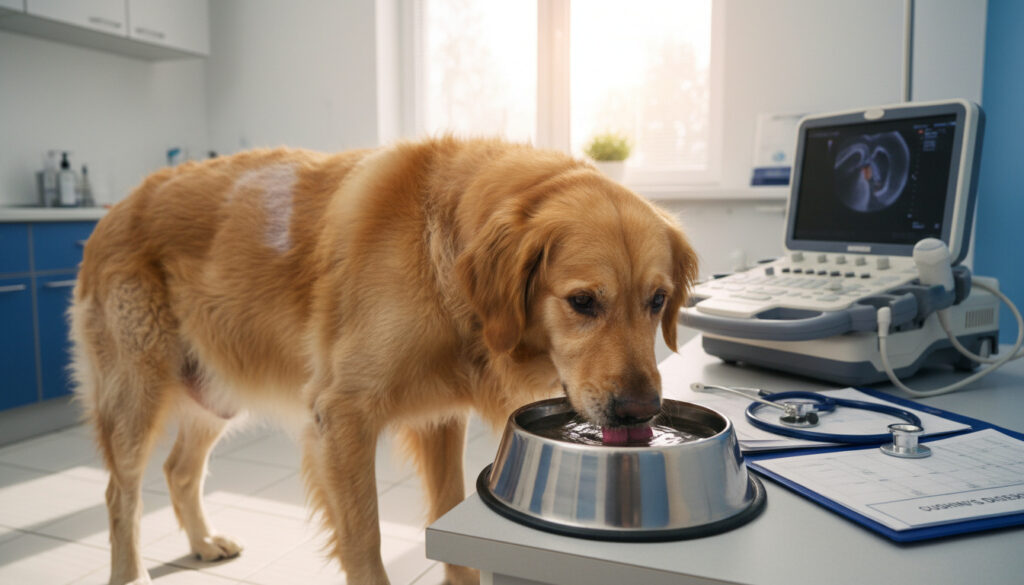
Cushing’s Disease in Dogs – Symptoms, Causes, Diagnosis, Treatment
Cushing’s disease, clinically known as hyperadrenocorticism, ranks among the most frequently diagnosed endocrine disorders in canine medicine. The condition develops when the adrenal glands produce excessive levels of cortisol, a hormone essential for stress response, metabolism, and immune function, but destructive in chronically elevated quantities.
The disorder typically manifests in middle-aged to older dogs, with symptoms progressing so gradually that owners often attribute early signs to normal aging. Without intervention, sustained cortisol excess damages multiple organ systems, potentially leading to diabetes, kidney failure, and life-threatening infections.
Understanding the distinctions between pituitary-dependent, adrenal-dependent, and iatrogenic forms enables veterinarians to tailor treatment protocols and establish realistic expectations for long-term management.
What Is Cushing’s Disease in Dogs?
Endocrine disorder marked by chronic cortisol hypersecretion from adrenal glands
Predominantly affects small breeds over 8 years weighing less than 44 pounds
Two primary forms: pituitary-dependent (85%) and adrenal-dependent (15-20%)
Chronic condition requiring lifelong treatment or specialized surgical intervention
Key Insights
- Pituitary-dependent Cushing’s accounts for 80-90% of diagnosed cases, resulting from benign or malignant pituitary tumors that overproduce ACTH
- Adrenal-dependent forms comprise 15-20% of cases, caused by tumors directly secreting cortisol from adrenal tissue
- Symptoms typically develop over a minimum of 12 months before clinical diagnosis
- Approximately 75% of affected dogs are female, suggesting hormonal influences in pathogenesis
- Surgical removal provides definitive cure in 80-85% of adrenal-dependent cases when tumors remain localized
- Neurological complications from expanding pituitary masses occur in roughly 15% of pituitary-dependent cases
- Iatrogenic Cushing’s, induced by corticosteroid medications, represents a reversible form that resolves upon drug discontinuation
Disease Snapshot
| Characteristic | Pituitary-Dependent | Adrenal-Dependent |
|---|---|---|
| Prevalence | 80-90% of cases | 15-20% of cases |
| Primary Cause | Pituitary tumor (ACTH overproduction) | Adrenal gland tumor (cortisol overproduction) |
| Tumor Type | Benign or malignant | Benign or malignant |
| Diagnostic Approach | Low-dose dexamethasone suppression, ACTH stimulation | Abdominal ultrasound, hormone testing |
| Treatment Standard | Lifelong oral medication | Surgical adrenalectomy or medication |
| Curative Potential | Medical management only; no surgical cure | Surgical cure possible if localized |
| Prognosis | Generally favorable with treatment | Depends on malignancy and metastasis |
| Breed Predilection | Poodles, Dachshunds, Boston Terriers | Boxers, Beagles |
What Causes Cushing’s Disease?
Three distinct etiological pathways produce Cushing’s syndrome in dogs. Pituitary-dependent hyperadrenocorticism develops when tumors in the pea-sized pituitary gland, located at the brain’s base, secrete excessive adrenocorticotropic hormone. This ACTH overproduction stimulates the adrenal glands to enlarge and release cortisol continuously.
Adrenal-dependent disease arises from primary tumors within the adrenal glands themselves, which autonomously secrete cortisol independent of pituitary signaling. These masses may affect one or both glands and vary in malignancy.
The third form, iatrogenic Cushing’s, stems from prolonged administration of corticosteroid medications prescribed for autoimmune disorders, allergies, or other inflammatory conditions. Unlike organic forms, this type typically reverses once steroid therapy tapers under veterinary supervision.
Which Breeds Face Higher Risk?
Genetic predisposition significantly influences disease probability. According to the American Kennel Club, Poodles, Dachshunds, Boston Terriers, Boxers, and Beagles demonstrate notably higher incidence rates compared to other breeds. Research indicates females constitute approximately three-quarters of diagnosed cases, though the precise biological mechanism remains under investigation.
Symptoms of Cushing’s Disease in Dogs
The clinical presentation of Cushing’s disease follows a markedly insidious course. Veterinary specialists identify increased thirst, excessive urination, and heightened appetite as the cardinal triad of early indicators. These metabolic changes reflect cortisol’s interference with kidney function, fluid balance, and glucose metabolism.
Physical Manifestations
As cortisol levels persistently elevate, dogs develop distinctive physical alterations. Bilateral symmetrical hair loss typically begins on the flanks, neck, and perineum, progressing to include the trunk while sparing the head and extremities. The skin becomes notably thin and fragile, bruising easily with minor trauma.
Muscle catabolism produces apparent muscle wasting, particularly noticeable in the hind limbs, while cortisol-induced redistribution of fat deposits creates the characteristic “potbelly” appearance. Calcium deposits may form small, hardened nodules on the abdominal skin, presenting as thickened dots visible during grooming.
Symptoms develop slowly, often taking at least a year to manifest, making them frequently mistaken for signs of aging. According to veterinary guidance, middle-aged to older dogs exhibiting increased drinking and urination warrant prompt endocrine screening rather than dismissal as inevitable aging changes.
Systemic Complications
Untreated hyperadrenocorticism precipitates severe secondary conditions. Complications include diabetes mellitus, kidney failure, systemic hypertension, and pancreatitis. The immunosuppressive effects of excess cortisol increase susceptibility to recurrent skin infections, urinary tract infections, and pulmonary infections. Thromboembolic disease poses particular danger, with blood clots potentially forming in the lungs, legs, or brain.
How Is Cushing’s Disease Diagnosed in Dogs?
Diagnostic protocols aim to confirm cortisol excess while differentiating between pituitary and adrenal origins. Veterinarians employ blood tests including the low-dose dexamethasone suppression test and ACTH stimulation test to evaluate the hypothalamic-pituitary-adrenal axis function.
Laboratory and Imaging Protocols
Baseline bloodwork and urinalysis identify characteristic abnormalities such as diluted urine, elevated liver enzymes, and stress leukograms. Definitive testing requires dynamic hormone assays that measure cortisol response to synthetic ACTH or dexamethasone suppression.
Abdominal ultrasonography serves dual purposes: assessing adrenal gland size and symmetry and detecting adrenal masses. Ultrasound may reveal tumors on the adrenal gland, guiding treatment decisions toward surgical or medical management. Advanced imaging such as MRI or CT scans may evaluate pituitary tumor size in cases showing neurological signs.
Treatment Options for Cushing’s Disease in Dogs
Therapeutic objectives focus on normalizing cortisol concentrations to alleviate clinical signs while avoiding iatrogenic hypoadrenocorticism. Treatment options include medication, surgery, radiation, or combinations, selected based on Cushing’s type, tumor characteristics, and the dog’s overall health status.
Medical Management
For pituitary-dependent Cushing’s, treatment typically involves daily lifelong medication to reduce cortisol production. Trilostane and mitotane represent the primary pharmaceutical agents, functioning through different mechanisms to suppress adrenal cortisol synthesis. Medical treatment cannot cure the disease but can control it for many years if the tumor remains small.
Dogs receiving medication require regular monitoring through blood tests to ensure appropriate hormonal suppression. Over-suppression risks Addisonian crisis, while under-suppression allows continued disease progression. Owners must maintain strict dosing schedules, as missed treatments precipitate rapid cortisol rebound.
Surgical Intervention
Adrenalectomy offers the only definitive cure for Cushing’s disease. Surgical removal of an adrenal tumor provides cure in approximately 80-85% of adrenal cases, provided the tumor hasn’t spread and remains surgically accessible. If the adrenal tumor proves benign, surgical removal cures the disease; malignant tumors carry guarded prognoses despite surgery.
Not all dogs qualify for adrenalectomy. Preoperative staging must confirm absence of metastasis, and patients require stabilization of blood pressure and metabolic status before anesthesia. Postoperative care demands intensive monitoring for hypoadrenocorticism until remaining adrenal tissue resumes function.
Knowledge Limitations
Current veterinary literature lacks specific data regarding treatment costs, comparative efficacy of natural remedies, standardized dietary protocols, and recent pharmaceutical advances post-dating 2023. Economic considerations remain highly variable based on geographic location, drug selection, and complication management.
How Does Cushing’s Disease Progress Over Time?
- Subclinical Onset (): Subtle increases in water consumption and urination frequency develop gradually, often unnoticed by owners during initial stages.
- Clinical Manifestation: Hair loss, potbelly development, and skin fragility become visually apparent, prompting veterinary consultation.
- Diagnostic Confirmation: Blood testing and imaging establish definitive diagnosis, differentiating between pituitary and adrenal forms.
- Treatment Initiation: Medical therapy begins with frequent monitoring, or surgical scheduling for eligible adrenal cases.
- Stabilization Period (): Symptoms improve within weeks, with skin and haircoat requiring several months for visible recovery.
- Lifelong Management: Continuous medication administration with periodic blood monitoring to prevent relapse or over-suppression complications.
What Do Veterinarians Know for Certain About Cushing’s?
Established Facts
- Pituitary-dependent Cushing’s comprises 80-90% of cases
- Excessive cortisol originates from either pituitary tumors or adrenal masses
- Specific breeds demonstrate genetic predisposition
- Lifelong medication effectively controls pituitary forms
- Surgical adrenalectomy cures localized adrenal tumors
- Untreated disease progresses to diabetes and kidney failure
Remaining Uncertainties
- Precise treatment costs and insurance coverage specifics
- Efficacy and safety of natural or holistic remedies
- Optimal dietary modifications for cortisol management
- Long-term outcomes of novel radiation therapies
- Genetic markers predicting individual susceptibility
- Standardized protocols for home monitoring between vet visits
Why Does Early Detection Matter for Dogs with Cushing’s?
Delayed diagnosis allows cortisol-mediated damage to accumulate, increasing the risk of irreversible complications. Dogs with untreated Cushing’s become progressively lethargic, immunocompromised, and prone to life-threatening thromboembolic events. Early intervention preserves quality of life and extends survival times significantly.
Middle-aged small-breed dogs presenting with polyuria, polydipsia, and dermatological changes require comprehensive endocrine evaluation. While some conditions like tonsil stones cause localized symptoms, Cushing’s affects systemic function, necessitating immediate veterinary assessment to prevent secondary organ damage.
What Do Veterinary Experts Say About Cushing’s Disease?
“Dogs with well-controlled Cushing’s can live relatively normal and happy lives for many years.”
— People’s Dispensary for Sick Animals (PDSA)
“Medical treatment cannot cure the disease but can control it for many years if the tumor is small.”
— VCA Hospitals Veterinary Specialists
“Some dogs may live without treatment for a time, but they tend to be happier and healthier with medication.”
— PDSA Veterinary Advisory
Key Takeaways for Dog Owners
Cushing’s disease requires careful differentiation between pituitary and adrenal forms to determine appropriate therapy. While medical management demands lifelong commitment, properly treated dogs achieve extended survival with excellent quality of life. Owners should monitor middle-aged small breeds for early signs of increased thirst and hair loss, seeking veterinary evaluation promptly. Just as outdoor lighting requires proper installation and maintenance, managing Cushing’s disease necessitates consistent medication administration and regular monitoring to prevent complications.
Frequently Asked Questions
What breeds are most at risk for Cushing’s disease?
Poodles, Dachshunds, Boston Terriers, Boxers, and Beagles show higher predisposition. The disease primarily affects dogs weighing less than 44 pounds, with approximately 75% of cases occurring in females.
How much does it cost to treat Cushing’s in dogs?
Specific treatment costs remain unestablished in current veterinary literature. Expenses vary based on medication selection, diagnostic testing frequency, and whether surgical intervention proves necessary.
Can Cushing’s disease be cured?
Adrenal-dependent Cushing’s may be surgically cured if tumors remain benign and localized. Pituitary-dependent forms require lifelong medication management rather than curative treatment.
Is Cushing’s disease contagious to other pets?
Cushing’s disease represents an endocrine disorder caused by internal hormone dysregulation or medication effects. The condition poses no infectious risk to other animals or humans.
How long can dogs live with Cushing’s disease?
With appropriate treatment, dogs with well-controlled Cushing’s live normal lifespans for many years. Prognosis depends on type (pituitary vs adrenal), severity, and presence of concurrent health conditions.
Are there natural treatments for Cushing’s disease?
Current veterinary research lacks verified information regarding natural remedy efficacy or safety for Cushing’s management. Medical or surgical intervention remains the evidence-based standard of care.
What is the difference between pituitary and adrenal Cushing’s?
Pituitary Cushing’s involves brain tumors overproducing ACTH, stimulating adrenal enlargement. Adrenal Cushing’s involves tumors within the adrenal glands themselves directly secreting excess cortisol.
Can diet help manage Cushing’s symptoms?
Specific dietary protocols for Cushing’s disease remain unclear in current veterinary literature. Standard senior dog nutrition supporting kidney health and weight management typically complements medical therapy.