What Are Tonsil Stones – Causes, Symptoms, Safe Removal
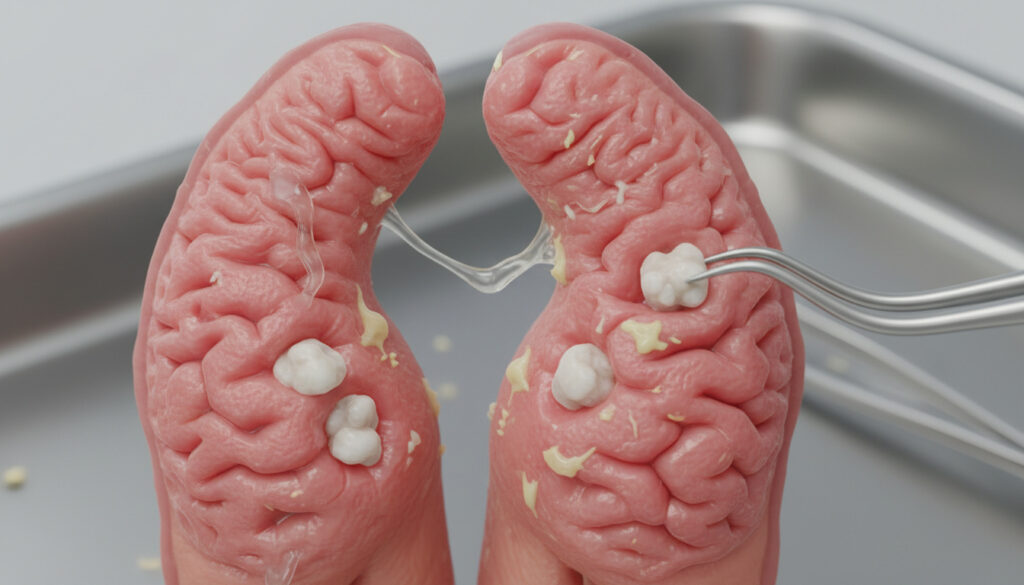
Tonsil stones, clinically termed tonsilloliths, represent calcified accumulations that form within the tonsillar crypts. These formations develop when food particles, dead epithelial cells, bacteria, and calcium minerals become trapped in the crevices of the tonsils and undergo gradual hardening. Medical imaging frequently reveals them as white or yellow pebbles embedded within the tonsil tissue, though many remain asymptomatic and undetected without specialized examination.
The prevalence of these formations peaks among teenagers and adults possessing larger tonsils or deeper anatomical crypts. Otolaryngological data suggests that while sulfur-producing anaerobic bacteria generate characteristic halitosis, the physical presence of stones rarely indicates malignant pathology or systemic disease.
Clinical understanding distinguishes these debris-based calcifications from infectious tonsillitis through distinct etiological pathways. Research from Medical News Today and major health institutions has established clear identification criteria, risk stratification models, and evidence-based management protocols that prioritize conservative intervention.
What Are Tonsil Stones?
Calcified debris trapped in tonsil crypts
Bad breath, throat irritation, visible white spots
Food particles, bacteria, dead cells, minerals
Gargling, gentle extraction, or surgical removal
- Mineral Composition: Stones contain calcium phosphates and carbonates alongside organic matter.
- Visual Identification: They appear as white or yellow pebbles on tonsil surfaces.
- Bacterial Origin: Anaerobic bacteria produce sulfur compounds responsible for malodor.
- Anatomical Risk: Chronic tonsillitis deepens crypts, increasing accumulation potential.
- Size Variation: Most measure 1-5mm, though larger formations occasionally occur.
- Demographics: Highest incidence occurs in adults and post-pubertal teenagers.
- Transmission: The condition is non-contagious and limited to individual anatomy.
| Aspect | Clinical Details | Severity | Recommended Action |
|---|---|---|---|
| Appearance | White or yellow hard lumps | Mild | Visual confirmation |
| Odor | Foul smell from sulfur compounds | Moderate | Antiseptic gargle |
| Discomfort | Throat irritation or foreign sensation | Mild-Moderate | Hydration and monitoring |
| Complications | Rare secondary infection | Low | ENT consultation if fever develops |
| Duration | Days to months without intervention | Chronic | Prevention protocols |
| Location | Tonsillar crypts exclusively | Localized | Crypt cleaning techniques |
| Texture | Calcified, stone-like consistency | Solid | Mechanical dislodgement |
| Spontaneous Resolution | Self-expulsion or dissolution common | Self-limiting | Observation acceptable |
What Causes Tonsil Stones?
Formation begins when debris accumulates within the deep tonsillar crypts characteristic of certain anatomical variations. Healthline reports that calcification hardens this trapped material over time, creating solid masses that range from microscopic to several millimeters in diameter.
Multiple risk factors contribute to this accumulation process. Poor oral hygiene allows bacterial proliferation that accelerates debris trapping, while chronic tonsillitis or frequent infections enlarge the crypts themselves. Additional triggers include post-nasal drip, acid reflux contributing to mucus changes, and dry mouth resulting from specific medications or hormonal fluctuations.
Mayo Clinic Health System research indicates that individuals with naturally larger tonsils possess more extensive crypt networks, creating physiological environments where calcification occurs more readily even among those maintaining adequate oral care.
Symptoms and Effects of Tonsil Stones
Do tonsil stones cause bad breath?
Halitosis represents the primary symptomatic complaint associated with these formations. Anaerobic bacteria colonizing the stones generate sulfur-producing compounds that create distinct foul odors, often detectable despite regular brushing and flossing routines. This bacterial metabolism occurs within the oxygen-depleted environment of the tonsillar crypts.
Are tonsil stones dangerous?
Medical consensus classifies tonsilloliths as generally harmless physical formations rather than pathological disease. WebMD confirms that serious complications remain rare, occurring only when stones become secondarily infected or grow large enough to obstruct breathing or swallowing.
Ear pain occasionally accompanies larger stones due to shared nerve pathways between the tonsils and ear structures. Swollen tonsils and referred jaw discomfort may also manifest, though these symptoms typically resolve following stone removal or spontaneous expulsion.
How to Remove Tonsil Stones
Management strategies range from conservative observation to active intervention, depending on stone size and symptomatic impact. Small formations frequently dislodge spontaneously during coughing, eating, or natural throat movements without requiring deliberate extraction.
Forceful poking or swabbing with sharp objects risks tonsil bleeding and secondary infection. Mechanical extraction should never involve pins, knives, or other sharp instruments that could perforate tonsil tissue.
Do tonsil stones go away without treatment?
Spontaneous resolution occurs frequently, particularly with smaller stones measuring under 5mm. These formations may fall out undetected during daily activities or gradually dissolve through natural enzymatic processes and gargling.
Safe home removal methods
Dental specialists recommend warm saltwater gargles to reduce bacterial loads and loosen surface stones. Gentle pressure using a cotton swab may dislodge visible formations, though care must be taken to avoid mucosal injury or gag reflex activation.
Non-alcoholic antibacterial mouthwashes provide effective chemical disruption of stone-forming biofilms without the drying effects associated with alcohol-based formulations. Regular use may prevent reaccumulation following successful removal.
Those seeking tonsil stones removal tips should prioritize hydration and mechanical irrigation over aggressive physical manipulation. Water flossers on low settings may help flush crypts without tissue damage. For more information on how your body manages stress and relaxation, explore the parasympathetic nervous system function and signs of activation $parasympathetic nervous system function.
Otolaryngologists remove large or deeply embedded stones using specialized instruments in clinical settings. Antibiotic therapy becomes necessary only when secondary bacterial infection develops, characterized by fever exceeding 101°F or significant tonsillar swelling.
How to Prevent Tonsil Stones
Daily prevention tips
Maintenance protocols focus on eliminating debris accumulation before calcification occurs. Australian health guidelines emphasize thorough oral hygiene including twice-daily brushing, flossing, and antibacterial mouthwash application to reduce bacterial substrates.
Hydration protocols ensure adequate saliva production, which naturally cleanses crypts through mechanical flushing. Managing underlying conditions such as post-nasal drip or gastroesophageal reflux reduces mucus and acid exposure that predisposes crypts to debris trapping.
When to seek medical help
ENT consultation becomes advisable when individuals experience more than three to four stone episodes annually, or when individual stones exceed 5mm in diameter. Persistent halitosis despite rigorous oral hygiene, difficulty swallowing, or breathing obstruction warrant immediate specialist evaluation.
How Do Tonsil Stones Form?
- Debris Accumulation: Food particles, epithelial cells, and bacteria trap within tonsillar crypts over several days.
- Bacterial Colonization: Anaerobic species establish biofilm communities, initiating sulfur compound production.
- Mineral Deposition: Calcium phosphates and carbonates precipitate around organic nuclei, hardening over weeks.
- Maturation or Expulsion: Stones either grow within crypts or dislodge through natural coughing or swallowing mechanics.
Established Facts vs. Remaining Questions
| Well-Established Information | Uncertain or Emerging Research |
|---|---|
| Stones consist of calcified organic debris | Precise prevalence rates in general population |
| Chronic tonsillitis increases formation risk | Why some individuals with deep crypts never form stones |
| Anaerobic bacteria cause characteristic halitosis | Long-term histological effects on tonsil tissue |
| Formations are benign and non-contagious | Specific timeline of calcification stages |
| Larger stones (>5mm) correlate with symptom severity | Genetic predisposition factors |
The Anatomy Behind Tonsil Stones
The palatine tonsils contain numerous crypts—invaginated pockets that increase surface area for immune surveillance. These structures normally trap foreign particles for lymphocyte examination, but anatomical variations creating excessively deep or branched crypts facilitate debris retention beyond normal clearance mechanisms.
Calcification represents a pathological extension of the tonsils’ natural filtering function. While the immune system efficiently processes biological threats, physical debris lacks enzymatic degradation pathways, allowing mineral accretion that transforms soft material into concrete-like formations over months.
Medical Perspectives on Tonsil Stones
Clinical observation confirms that tonsilloliths, while potentially distressing due to odor and discomfort, rarely indicate serious disease processes requiring aggressive intervention.
— Cleveland Clinic Department of Otolaryngology
Distinguishing between debris-based stones and infectious tonsillitis remains crucial for appropriate treatment selection, as the former requires mechanical management while the latter demands antimicrobial therapy.
— Mayo Clinic Health System
Recurrent stone formation often signals underlying anatomical or physiological factors—such as chronic cryptic tonsillitis—that may warrant definitive surgical consideration.
— Magrabi Health ENT Specialists
Key Takeaways About Tonsil Stones
Tonsilloliths constitute common calcified formations resulting from debris accumulation in tonsillar crypts, typically presenting as white or yellow pebbles associated with halitosis but rarely indicating serious pathology. While tonsil stones symptoms and causes vary by individual anatomy, conservative management through gargling and hygiene proves effective for most cases, with surgical intervention reserved for recurrent, severe presentations.
Do tonsil stones bleed when removed?
Minimal bleeding may occur if extraction disturbs tonsil tissue, but significant hemorrhage indicates improper technique. Gentle removal rarely produces more than slight spotting.
Can children get tonsil stones?
While possible, pediatric incidence remains lower than adult cases due to smaller tonsil size. Teenagers experience higher rates approaching adult prevalence.
Are tonsil stones contagious?
No. These formations result from individual anatomical factors and personal debris accumulation, not transmissible pathogens.
What do tonsil stones smell like?
The odor resembles rotten eggs or sulfur due to anaerobic bacterial metabolism producing volatile sulfur compounds.
Can you feel tonsil stones with your tongue?
Many individuals detect larger stones as foreign bodies or rough spots, though smaller formations remain undetectable without visual examination.
Do tonsil stones cause ear pain?
Shared nerve pathways between the tonsils and ears create referred pain sensations, particularly when stones press against specific nerve branches.
More related posts
 Tents for Sale NZ: Compare New, Used & Cheap Camping Tents
 KiwiSaver Contribution Minimum Increase: 2026 Guide
 Hunting and Fishing Westgate: Store Hours, Online Shopping & More
 India vs Netherlands T20 World Cup 2026 Scorecard: Win by 17
 Send Money to Republic of the Congo: Services, Fees & Risks
 New Balance Women’s Fresh Foam Running Shoes Compared
 Surf Report Mount Maunganui: Today, Forecast & Cams
 OPI Nail Polish NZ: Where to Buy, Best Shades & Prices (2025)