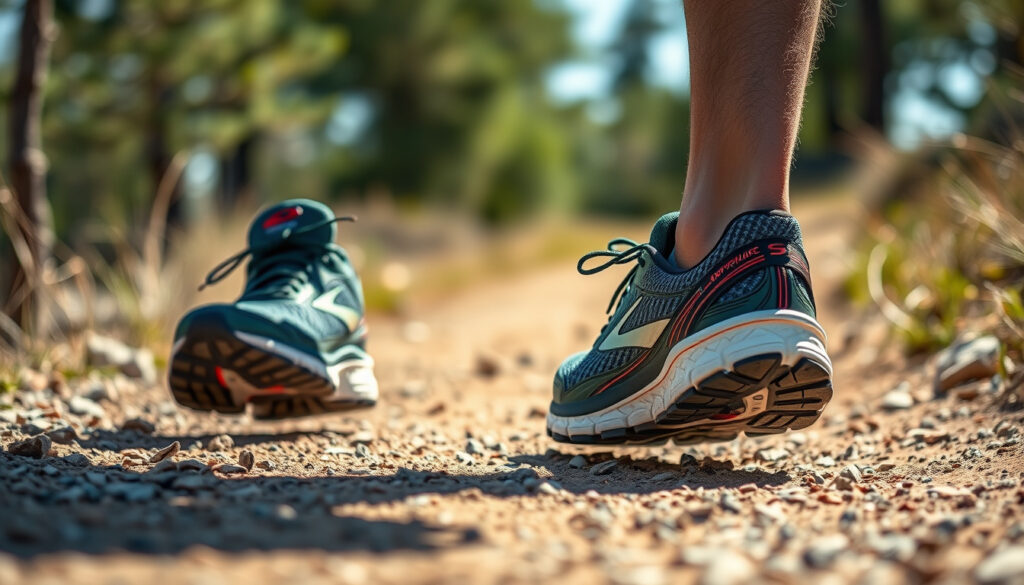
Brooks Adrenaline GTS 24 Review: Stability for Runners
If you’ve ever finished a run with a dull ache tracking from your knee down to your shin, you already know how much the wrong shoe can cost you. The Brooks Adrenaline GTS 24 targets exactly that crowd — runners who overpronate and need real stability without feeling like they’re wearing a medical device. After 24 iterations of this model, Brooks has refined its GuideRails system into something genuinely useful. Let’s see what the data says.
Cushioning Type: Nitrogen-infused · Support Feature: GuideRails stability · Best For: Heel strikers · Versatile Use: Daily training, long runs · Available In: Men, Women, GTX
Quick snapshot
- Stability shoe for overpronators with GuideRails heel support (NorthernRunner.com)
- Weighs 283 g (Men’s US 9) with 12 mm drop (Flawless Shoe Reviews)
- 35 mm heel stack, 23 mm forefoot stack measured independently (Flawless Shoe Reviews)
- Whether GuideRails alone resolves knee discomfort for all heel strikers
- Exact scope of improvements over the GTS 23 beyond durability
- The GTS 24 is the 24th iteration; GTS 25 is now available with updated geometry (Outdoor Gear Lab)
- GTS 25 reduces drop to 10 mm, broadens platform — notable shift for heel strikers
The specifications below consolidate data from independent testing labs and retail listings.
| Attribute | Value |
|---|---|
| Model | Adrenaline GTS 24 |
| Cushioning | Nitrogen-infused |
| Support | Stability for heel strikers |
| Use Cases | Daily training, long runs |
| Variants | Men, Women, GTX |
What are Brooks Adrenaline GTS 24 good for?
The Brooks Adrenaline GTS 24 is a road running shoe built for runners who need mild pronation support without the overcorrective feel of a motion-control shoe. It serves as a daily trainer, handling easy miles, long runs, and casual jogs with the same platform. The Guide Rails — firmer foam rails flanking the heel — wrap around that zone to counteract excessive inward roll without forcing the foot into a rigid position (NorthernRunner.com).
Overpronation left unchecked can send shock through the shins, under the kneecap, or along the outer thigh on flat surfaces — a repetitive-motion problem that compounds over miles (NorthernRunner.com). The GTS 24 addresses this by letting the Guide Rail engage only when the heel rolls inward past a normal threshold, preserving natural biomechanics otherwise.
Daily training and long runs
RunRepeat testers measured the GTS 24 at 10.1 N in a standardized bend test, confirming the shoe flexes easily despite its added foam stack — a practical indicator that it won’t fight your stride during a 10-miler (RunRepeat). The nitrogen-infused cushioning keeps the ride soft without the marshmallow collapse some daily trainers develop after 30 kilometers.
For runners logging consistent weekly mileage, the GTS 24 holds its cushioning better than predecessor versions — which matters when you’re running the same pair for months on end.
Heel strikers needing stability
Heel-strike mechanics amplify the load that travels up the leg, making the heel stack height and drop critical specs. Outdoor Gear Lab independently measured 39 mm of foam at the heel and a 13 mm drop to the forefoot (Outdoor Gear Lab). That 12 mm official drop places more load on knees and hips compared to lower-drop shoes — a trade-off runners with existing joint concerns should weigh carefully.
Runners with known knee or hip issues may want to test whether the 12 mm drop works for them — or consider the GTS 25’s lower 10 mm drop as an alternative.
Who should wear Brooks Adrenaline GTS 24?
The GTS 24 hits a specific sweet spot: runners with mild to moderate overpronation who want real support but don’t need the aggressive posting of a motion-control shoe. It delivers what Brooks calls “reliable comfort and mild stability,” making it viable for newer runners transitioning from neutral shoes, as well as seasoned runners who notice fatigue in their medial arch after long efforts (YouTube reviewer). RunRepeat specifically recommends it for heel strikers who found earlier Adrenaline models lacking in cushioning — the nitrogen-infused foam addresses exactly that gap.
Brooks positions the GTS 24 as ideal for heel strikers needing stability, but that same 12 mm drop that benefits heel landing increases knee load. The shoe suits those without pre-existing joint issues; those with knee pain history should confirm fit with a podiatrist first.
Overpronators and stability seekers
GuideRails engage selectively — only when the foot rolls inward beyond the normal range. This means the shoe doesn’t fight neutral runners who land with a balanced stride. For overpronators, the firmer foam rails provide a physical cue without the rigid posting that makes some stability shoes feel like orthopedic devices.
Runners with knee concerns
The GTS 24 offers generous padding in the heel and on the tongue, which Meta Endurance’s reviewer noted in testing (Meta Endurance). However, one reviewer experienced knee discomfort after approximately 40 kilometers, attributing it to the stability features shifting shock absorption from the ankles toward the knees — a reminder that more support isn’t automatically better for joint health.
The pattern: stability features can redirect rather than absorb impact, making individual testing essential for runners with prior knee issues.
Is Brooks Adrenaline good for knee pain?
The relationship between the GTS 24 and knee pain is nuanced. GuideRails stability genuinely helps overpronators maintain proper alignment, which reduces the inward tibial rotation that stresses the knee joint over time. This mechanism — not marketing, but biomechanics — is why Brooks positions the Adrenaline line as a stability solution.
The catch: higher heel-to-toe drops like the GTS 24’s 12 mm place slightly greater load on knees and hips compared to lower-drop alternatives. Runners with known knee issues need to evaluate whether the stability benefits outweigh that increased load, or whether a lower-drop stability option would serve them better (Outdoor Gear Lab).
Stability for knee pain relief
The GuideRail system works by physically blocking excessive medial collapse during stance phase. For heel strikers whose knee pain stems from overpronation-driven Q-angle stress, this targeted support can reduce cumulative joint loading. Meta Endurance’s reviewer noted the generous heel padding but flagged knee discomfort after sustained mileage — suggesting the stability features may shift rather than absorb impact.
Expert-tested recommendations
Brooks has cultivated relationships with podiatrists and running-form specialists who test the Adrenaline series, though specific podiatrist endorsements for the GTS 24 weren’t published in accessible review sources. The shoe’s design philosophy — mild stability, not maximal correction — aligns with contemporary podiatric thinking that favors supporting natural gait over forcing neutral alignment.
If knee pain persists in the GTS 24 despite the stability features, the culprit may be the 12 mm drop rather than insufficient support. The GTS 25’s drop to 10 mm represents Brooks acknowledging this trade-off.
Do podiatrists recommend Brooks Adrenaline?
Brooks has historically positioned the Adrenaline line as a podiatrist-tested series, and the GTS 24’s predecessor models have appeared in foot-health discussions. The core logic: for patients with mild overpronation who need daily-wear running shoes, the Adrenaline’s balance of support and comfort makes it a defensible recommendation. Brooks includes Go To Support Technology in the Adrenaline series to provide targeted stability for overpronators (Fit2Run).
What podiatrists typically evaluate: whether a shoe maintains midsole integrity over miles, whether the last accommodates natural foot width progression during gait, and whether heel-to-toe drop aligns with the patient’s arch type. The GTS 24’s nitrogen-infused midsole and GuideRails address the first two; the 12 mm drop requires individual assessment for the third.
Podiatrist-approved walking shoes
Many runners use the Adrenaline for both running and walking, and Brooks explicitly markets the GTS line as suitable for all-day wear. For patients who transition between exercise and daily walking, the GTS 24’s heel padding and stable platform offer the kind of joint protection podiatrists prioritize.
Thoughts on Brooks stability
The Brooks-versus-Hoka debate in podiatric circles typically centers on cushioning philosophy. Hoka leans into maximum midsole volume to absorb shock; Brooks prioritizes structure and support to prevent overpronation from loading joints incorrectly (Runners World). Neither is universally superior — the right choice depends on whether the patient’s primary concern is impact absorption (lean Hoka) or gait correction (lean Brooks).
The catch: runners whose knee pain stems from overpronation may find Brooks addresses the root cause more directly, while those with impact-related pain may benefit more from Hoka’s cushioning approach.
Is there a difference between Brooks Adrenaline GTS 24 and 25?
The Brooks Adrenaline GTS 25 introduced a rearfoot geometry change that alters how the shoe transitions from heel strike to midfoot — a more fundamental shift than the typical year-over-year revision (Flawless Shoe Reviews). The drop dropped from 12 mm to 10 mm, and the platform broadened. For heel strikers coming from the GTS 24, the GTS 25 will feel noticeably different — smoother heel bevel, less abrupt transition.
The GTS 25 also moved the arch support more subtle, which matters for runners who found the GTS 24’s prominent arch feel intrusive. Both remain stability shoes, but the GTS 25 shifts slightly toward cushioning comfort while maintaining the GuideRails system. For those interested in stability running, you can find a review of the Brooks Adrenaline GTS 24 at $Sports Direct promo code.
Key updates from 24 to 25
Stack height increased: GTS 25 measures 37 mm heel and 27 mm forefoot versus the GTS 24’s 35 mm and 23 mm. That extra foam is noticeable, according to reviewers who handled both (Flawless Shoe Reviews). The weight difference is technically real — GTS 25 is 289 g versus GTS 24’s 283 g for Men’s US 9 — but not perceptible on foot.
Both models are available in standard, wide, and extra wide widths — a point of consistency that matters for runners who need width options. Nine colors are available in the GTS 25; the GTS 24’s colorway is narrower but still varied.
Similarities in support
GuideRails remain the core stability mechanism in both models. Brooks kept the Go To Support Technology package intact in the GTS 25. For runners whose sole concern is pronation control, both shoes deliver comparable support philosophy — the difference is in execution and feel, not the underlying engineering approach.
The implication: existing GTS 24 owners with no knee issues have no urgent reason to upgrade, but heel strikers sensitive to transition smoothness should test the GTS 25.
The comparison between Hoka and Brooks comes down to a philosophical split: Hoka maximizes cushioning volume for impact absorption, while Brooks prioritizes structure and support to correct overpronation before it loads joints incorrectly (Runners World). For heel strikers with knee pain specifically tied to overpronation, Brooks stability may address the root cause more directly than Hoka’s cushioning approach, which absorbs impact but doesn’t correct biomechanics.
The table below breaks down how the GTS 24, GTS 25, and a comparable Hoka model stack up on key specs.
| Attribute | GTS 24 | GTS 25 | Hoka (Comparable) |
|---|---|---|---|
| Drop | 12 mm | 10 mm | Varies by model |
| Heel Stack | 35 mm | 37 mm | Varies |
| Forefoot Stack | 23 mm | 27 mm | Varies |
| Weight (Men’s US 9) | 283 g | 289 g | Varies |
| Primary Focus | Stability + cushion | Smoother transition | Max cushioning |
| Width Options | Standard, Wide, X-Wide | Standard, Wide, X-Wide | Model-dependent |
What this means: Brooks targets the biomechanics-first runner, Hoka targets the comfort-first runner, and the GTS 25 specifically targets heel strikers who want smoother transitions than the GTS 24 offered.
Independent lab measurements for the GTS 24 are compiled in the specs table below.
| Specification | Value |
|---|---|
| Model | Brooks Adrenaline GTS 24 |
| Heel Stack | 35 mm (Outdoor Gear Lab: 39 mm foam) |
| Forefoot Stack | 23 mm |
| Drop | 12 mm |
| Weight (Men’s US 9) | 283 g (10 oz) |
| Bend Test Result | 10.1 N (flexible) |
| Cushioning Technology | Nitrogen-infused foam |
| Stability System | GuideRails (heel rail) |
| Upper | Engineered mesh |
| Available Widths | Standard, Wide, Extra Wide |
| GTX Variant | Available (waterproof) |
Upsides
- GuideRails provide targeted stability without overcorrecting neutral strides
- Nitrogen-infused cushioning maintains comfort over long distances
- 24th iteration reflects decades of refinement and user feedback
- Generous heel and tongue padding for all-day comfort
- Available in wide and extra-wide widths
- Bend test confirms flexibility despite added foam
Downsides
- 12 mm drop places more load on knees and hips than lower-drop alternatives
- Stability features may shift shock toward knees for some runners
- Prominent arch support may feel intrusive for neutral-arch runners
- GTS 25 represents a meaningful upgrade in transition smoothness
- Some reviewers report knee discomfort after sustained mileage
The Brooks Adrenaline GTS 24 is a versatile daily trainer with stability designed for runners who need a supportive shoe for logging easy miles.
— Reviewer testing, YouTube
Higher heel-to-toe drops place a slightly greater load on the knees and hips, and runners with known issues in those areas may want to consider lower drops to help prevent soreness or potential injuries.
— Outdoor Gear Lab (independent testing authority)
The Brooks Adrenaline GTS 24 occupies a reliable position in the stability-shoe market, refined across 24 generations. For heel strikers with overpronation concerns who haven’t yet developed knee sensitivity, it delivers exactly what the GuideRails system promises. Runners with existing joint issues should evaluate whether the 12 mm drop and stability mechanism work with their body — and watch the GTS 25 as Brooks’ acknowledged refinement of this platform.
Related reading: Kia Niro Hybrid NZ – Price, Specs, Fuel Economy & Reviews
Heel strikers battling knee pain from overpronation often find relief in the GuideRails system, as one stability shoes review aptly demonstrates through real-run testing.
Frequently asked questions
What makes Brooks Adrenaline GTS 24 suitable for heel strikers?
The 12 mm drop and 35 mm heel stack position the GTS 24 for heel-strike mechanics. GuideRails engage when the heel rolls inward excessively, supporting the stride without forcing rigid correction. The nitrogen-infused cushioning absorbs impact while maintaining responsiveness through the gait cycle.
How does GuideRails work in Brooks Adrenaline GTS 24?
GuideRails are firm foam rails positioned on either side of the heel section. They engage only when the foot rolls inward past a normal threshold, providing physical resistance to excessive pronation. This selective engagement preserves natural biomechanics for neutral runners while offering targeted support for overpronators.
Are Brooks Adrenaline GTS 24 shoes available in wide widths?
Yes. Brooks offers the Adrenaline GTS 24 in standard, wide, and extra-wide widths, accommodating a range of foot shapes. The GTS 25 carries the same width options, making both models viable for runners who need accommodation beyond the standard last.
What colors are available for Brooks Adrenaline GTS 24 GTX?
The GTX (waterproof) variant is available in Black, Night Shadow, and Coconut colorways, per retail listings. Brooks typically rotates colorways seasonally, so availability may vary by retailer.
Is Brooks Adrenaline GTS 24 good for walking?
The GTS 24’s generous heel padding, stable platform, and nitrogen-infused cushioning make it suitable for all-day walking, not just running. Brooks markets the Adrenaline line as viable for both running and casual wear. Runners who use it primarily for walking report comfort over sustained periods.
How does Brooks Adrenaline GTS 24 compare to GTS 23?
The GTS 24 is a solid upgrade from the GTS 23, with improved durability and a better-balanced ride according to reviewer testing. The nitrogen-infused cushioning and refined GuideRails represent the most tangible improvements — the GTS 23 had been criticized for insufficient cushioning in the midsole.
Where can I buy Brooks Adrenaline GTS 24?
The Brooks Adrenaline GTS 24 is available through Brooks Running’s official website, major running retailers, and general sports retailers. The GTS 25 retails at $155.00 — the GTS 24 price varies by retailer and may be discounted as the earlier model.
More related posts
 How Much Is an Ounce? Grams, ML, & Gold Value Guide
 Samoa vs Tonga 2025: Times, Results, Viewing Guide
 Hunt for Gollum: Release Date, Cast, and Aragorn Recast
 Blood Moon Total Lunar Eclipse NZ 2026: Times & Viewing Guide
 Waitaki Girls’ High School: Facts, History, Principal & Decile
 2026 Calendar with Holidays NZ: Free Printable PDF
 Weather Tomorrow Ireland: Met Éireann Dry 18-20°C Forecast
 Nelson Things to Do: Top 10 Attractions & Activities Guide