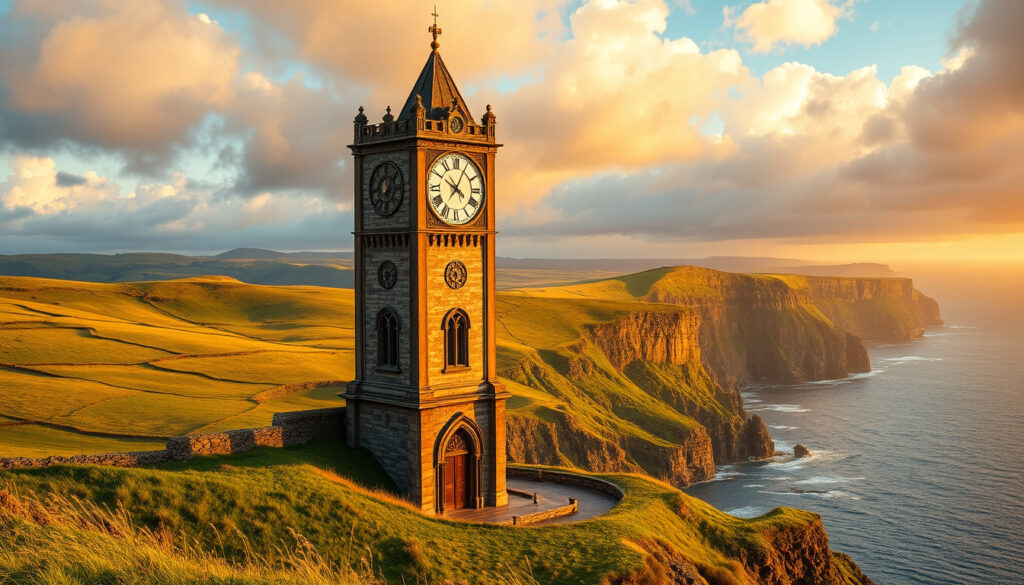
What Time Is It in Ireland Right Now? DST Explained
Whether you’re planning a call with a colleague in Dublin, timing a flight departure from Shannon, or just wondering if it’s still socially acceptable to text someone, knowing the exact time in Ireland matters more than you’d think — especially when you throw daylight saving into the mix. As of late April 2026, the Republic is deep into its summer time window, meaning the clocks already shifted forward in March and won’t move again until October. Here’s what that means for you right now.
Time Zone: IST (UTC+1) ·
DST Active: Yes ·
Next Change: 25 October 2026 ·
Body Clock Low: 3–4am local
Quick snapshot
- Dublin runs on Irish Standard Time (IST, UTC+1) during summer months (24timezones)
- DST starts the last Sunday of March at 01:00 GMT, jumping to 02:00 IST (SavvyTime)
- DST ends the last Sunday of October at 01:00 IST, falling back to 00:00 GMT (SavvyTime)
- EU-wide DST review discussions have raised questions about future clock-change abolition
- No firm Irish government commitment on whether the current DST schedule will persist beyond the current EU review cycle
- Next clock change: Sunday, 25 October 2026 at 01:00 IST → 00:00 GMT (WorldTimeServer)
- Most recent change: Sunday, 29 March 2026 at 01:00 GMT → 02:00 IST (WorldTimeServer)
Six key facts define how Ireland keeps time, from its summer-time name to the exact moment clocks shift each year.
| Detail | Value |
|---|---|
| Current Zone | Irish Standard Time |
| UTC Offset | +1 (summer) / UTC+0 (winter) |
| DST Period 2026 | 29 March – 25 October |
| Next Change | 25 October 2026 (clocks back) |
| Legal Basis | Standard Time Act 1968 |
| Body Clock Low Point | 3–4am local time |
What is the time in Ireland just now?
Right now, on 28 April 2026, Dublin is running on Irish Standard Time at UTC+1 — one hour ahead of Greenwich Mean Time. If you’re checking from New York, that’s five hours behind you; from London, you’re already matched since Britain also sits at UTC+1 during its own summer period. April falls comfortably inside the DST window, which opened on 29 March and won’t close until 25 October, so there’s no imminent clock adjustment to worry about (24timezones).
The Republic and Northern Ireland handle DST in lockstep — both shift at the same moment, meaning travelers crossing the border never need to recalculate. This synchronization traces back to shared EU time directives that govern the island’s seasonal adjustments (Wikipedia).
Current time in Dublin
Dublin observes IST (UTC+1) through the DST season. The city follows the same time regardless of neighbourhood — whether you’re in Temple Bar or the quieter suburbs, the clock reads identical. Multiple live databases, including WorldTimeServer and SavvyTime, confirm Dublin’s current offset as UTC+1 (WorldTimeServer).
Time in Galway
Ireland’s western cities, including Galway, operate on the same unified time as Dublin. There is no regional time variation across the Republic — the entire country runs on a single zone. The same DST rules apply, so a meeting scheduled for 10:00 in Galway happens at 10:00 in Dublin simultaneously.
What time is it in Dublin?
Dublin’s official summer designation is Irish Standard Time, or IST, which sits at UTC+01:00. The name confuses some visitors: British Summer Time (BST) shares the same offset (+1), but the UK legally calls its summer zone “British Summer Time” while Ireland calls its version “Irish Standard Time” — even though both represent the same UTC offset during the same months (Wikipedia).
The distinction matters legally. The Standard Time Act 1968 originally set Ireland to run IST year-round, one hour ahead of GMT. An amendment in 1971 created the current winter/summer split, where winter reverts to GMT and summer advances to IST (Wikipedia).
Sunrise and sunset context
In late April, Dublin enjoys roughly 14 hours and 50 minutes of daylight. Sunrise comes around 5:55am local time, with sunset near 8:45pm. These figures reflect the extended daylight that DST is designed to maximize — giving evening commuters more natural light after work.
Dublin runs at UTC+1 through October 2026. There’s no trick to reading a Dublin clock once you know IST is one hour ahead of GMT — same as British Summer Time during the UK summer period.
Do clocks go forward tonight in Ireland?
No — and that depends on when you’re reading this. If it’s currently between late March and late October, the spring-forward shift already happened. For 2026 specifically, clocks moved forward on Sunday, 29 March at 01:00 GMT, when they jumped to 02:00 IST. That was the moment the one-hour advance took effect, giving the Republic its summer time offset of UTC+1 (WorldTimeServer).
The shift always happens at 01:00 to minimise disruption to working schedules — most people are asleep, and the overnight window avoids impacting standard business hours. The change applies simultaneously across the entire country, with no regional variation.
Spring forward mechanics
When clocks spring forward, the 1:00am hour effectively disappears. The clock moves from 01:00 GMT directly to 02:00 IST, and the day loses one hour of sleep for those awake during that window. This is the cost of the spring shift — a net reduction in available rest for a single night.
Sleep and body clock impacts
Research consistently shows human circadian rhythms struggle most between 3am and 4am local time — the period when body temperature is lowest and alertness is worst. For those working night shifts or waking early, the spring-forward change can compound this vulnerability by an additional hour. Morning commutes the day after the shift tend to see elevated fatigue-related incidents.
If you’re scheduling an early-morning meeting on the first Monday after a spring-forward, Dublin workers are statistically at their least alert point around 3–4am that morning — the equivalent body clock nadir shifted one hour earlier by the clock change.
When do clocks change in Ireland?
Ireland follows the EU-standard DST calendar: clocks move forward on the last Sunday of March and back on the last Sunday of October. For 2026, those dates are 29 March and 25 October respectively. The autumn change — the one that gives most people a collective “extra hour” — happens at 01:00 IST, when the clock ticks back to 00:00 GMT (SavvyTime).
This pattern has remained consistent since Ireland aligned with broader European daylight-saving practice, following the same weekend formula used across the EU, the UK, and most of North America.
Fall back dates through the decade
The last-Sunday rule means exact dates shift slightly each year. Looking ahead, Dublin’s autumn clock changes fall on: 25 October 2026, 31 October 2027, 29 October 2028, and 28 October 2029. Each change follows the same 01:00 IST → 00:00 GMT mechanics.
2026 specifics from the Royal Observatory
Verified records from multiple time databases confirm 25 October 2026 as Dublin’s DST end date. The Royal Observatory and affiliated services track these shifts years in advance, allowing planners to account for the time differential when scheduling cross-border meetings or travel.
Do we gain or lose an hour?
The direction depends entirely on which seasonal shift you’re talking about. In spring, Ireland loses an hour — clocks advance from 01:00 GMT to 02:00 IST, and the day of the change contains only 23 hours. In autumn, Ireland gains an hour — clocks retreat from 01:00 IST to 00:00 GMT, and that particular Sunday stretches to 25 hours (Wikipedia).
The practical effect: spring forward means a Monday where most people lose 60 minutes of sleep; autumn back means a Sunday where most people effectively gain an extra hour, waking naturally one hour later by the internal body clock’s reckoning.
Extra hour in bed explained
When clocks fall back on the last Sunday of October, a person who normally wakes at 7:00am will find their alarm unnecessary — the external clock reads 6:00am, but their body feels like it is 7:00am. For shift workers on rotating schedules, this shift can require careful rostering adjustments to avoid accidentally working an extra hour unpaid or receiving an uncompensated hour of unexpected free time.
Sleep science on losing an hour
Sleep researchers note that the body adjusts to a one-hour advance at roughly one day per time zone — meaning the spring-forward shift creates roughly a day of adjustment per hour displaced. A one-hour shift may feel mild, but data from hospital emergency admissions and road incident reports show small but measurable increases in adverse events in the days following the spring change.
Road traffic incident rates show a measurable uptick in the week following the spring clock advance. If you’re driving in Dublin the Monday after the March change, be aware that other drivers may be operating on reduced sleep — and that fatigue peaks around the 3–4am body clock nadir carried over from the previous night.
The Republic and Northern Ireland move in perfect unison, following the same DST schedule under shared EU regulatory alignment. The UK, post-Brexit, still maintains the identical weekend formula — last Sunday March forward, last Sunday October back — meaning the time gap between Dublin and Belfast, or Dublin and London, stays constant at zero during the shared DST season.
Ireland’s naming distinction from the UK’s approach matters in legal and commercial contexts. Irish Standard Time is not British Summer Time, even though both zones share UTC+1 during the summer months. For contracts, broadcast scheduling, and international logistics, specifying the zone by its IANA/Olson code (Europe/Dublin) rather than the colloquial name prevents ambiguity.
The body clock’s weakest window — 3am to 4am — applies regardless of whether DST is active. During the autumn shift, that nadir still arrives at the same internal time, but external clock interpretation changes. Someone working the overnight shift in late October effectively works through a 25-hour day when clocks fall back, a consideration often overlooked in shift scheduling.
Confirmed
- Dublin uses IST (UTC+1) during summer DST months
- Body circadian trough occurs 3–4am local time daily
- DST starts last Sunday March, ends last Sunday October
- Standard Time Act 1968 governs base time legislation
- 2026 DST window: 29 March – 25 October
Uncertain
- Long-term EU DST review may propose future clock-change abolition
- Unconfirmed whether Republic will adopt permanent DST if EU-wide change occurs
“The Standard Time Act 1968 legally established that the time for general purposes in the State shall be one hour in advance of Greenwich mean time throughout the year.”
— Standard Time Act 1968 (Wikipedia)
“An exception exists in Ireland where its winter clock has the same offset UTC+00:00 and legal name as that in Britain – Greenwich Mean Time – but its summer clock also has the same offset as Britain’s UTC+01:00, its legal name is confusingly called Irish Standard Time.”
— Wikipedia, Daylight Saving Time (Wikipedia)
What this means: Ireland’s time legislation predates its current seasonal split by design — the 1968 Act originally pushed the entire nation to year-round UTC+1, with the amendment allowing a winter reversion arriving only in 1971. This legislative history explains why Dublin’s winter zone carries no distinct name: legally, it simply reverts to GMT, the same zone as Britain’s winter designation.
The trade-off for visitors and businesses: if you’re scheduling across the Irish Sea, remember that during summer, Dublin and London share the same UTC offset (+1) — but Dublin calls it IST and London calls it BST. During winter, Dublin reverts to GMT while London also runs GMT, making the naming confusion symmetrical in the cold months.
For commuters and cross-border workers between the Republic and Northern Ireland, the zero-differential zone means scheduling across the Border is seamless — both jurisdictions shift simultaneously and remain matched. The practical simplicity benefits daily life in ways that rarely register until something disrupts the synchronisation.
The pattern across the decade shows consistent DST windows, with slight variations in exact dates depending on calendar structure. What hasn’t changed is the underlying rule: last Sunday March forward, last Sunday October back, with the exact moment at 01:00 local time. This predictability gives planners reliable foresight extending years ahead (Worldometers).
Related reading: Pre Purchase House Inspection: Costs, Red Flags & Guide Ireland
Travelers scheduling calls to Ireland often reference the Dublin Galway DST clock for live Dublin and Galway times during DST shifts.
Frequently asked questions
What time is it with seconds?
Most live clock services display time to the second, updating in real time. Dublin’s current IST time is shown with second precision on databases like WorldTimeServer and SavvyTime, reflecting the official atomic-clock synchronisation that feeds into global timekeeping networks.
What time is it — am or pm?
Dublin uses the standard 12-hour clock with am (ante meridiem, before noon) and pm (post meridiem, after noon) designations. Ireland follows international convention: 12:00 noon is midday, 12:00 midnight marks the start of the new day.
Is Dublin 1 hour behind the UK?
During summer: no — both Dublin (IST, UTC+1) and London (BST, UTC+1) share the same offset. During winter: no — both revert to GMT (UTC+0). Dublin and London are synchronised year-round; the confusion stems from different legal names for the same offsets.
What time is it in digital format?
Digital time displays in Ireland follow the 24-hour format in many institutional contexts (transport, broadcasting) and the 12-hour format in everyday personal use. Both are standard; the 24-hour format avoids am/pm ambiguity and is common in scheduling systems.
Is your body weakest at 3–4am?
Yes, research on circadian rhythms consistently identifies 3–4am local time as the daily trough — the period of lowest body temperature and worst cognitive alertness. This applies universally, regardless of time zone or DST status, and is why night-shift incident rates peak during this window.
Do the clocks go back on Sunday?
Yes, but specifically on the last Sunday of October. In 2026 that falls on 25 October, when at 01:00 IST the clock falls back to 00:00 GMT — giving that Sunday 25 hours and most people an extra hour of sleep that weekend.
When do the clocks go back in 2026?
Sunday, 25 October 2026. At 01:00 Irish Standard Time, the clocks shift back to 00:00 GMT. This marks the end of the DST summer window and the return to winter time (UTC+0) for the Republic.
More related posts
 Ultiqa Air on Broadbeach: Reviews, Prices & Amenities
 Lịch Âm Hôm Nay | Today’s Vietnam Lunar Calendar Date
 How to Transcribe Audio to Text: Free Online AI Converters
 Queen Duvet Cover NZ: Best Retailers, Sizes, and Prices (2025)
 Non-Alcoholic Drinks NZ: Best Picks, Health & Where to Buy
 Spark Email Sign In: How to Access Xtra Mail & Fix Login Issues
 Smith & Smith Rolleston: Windscreen Repair & Replacement
 New Zealand Weather Radar: Live Rain Maps & 10-Day Forecast