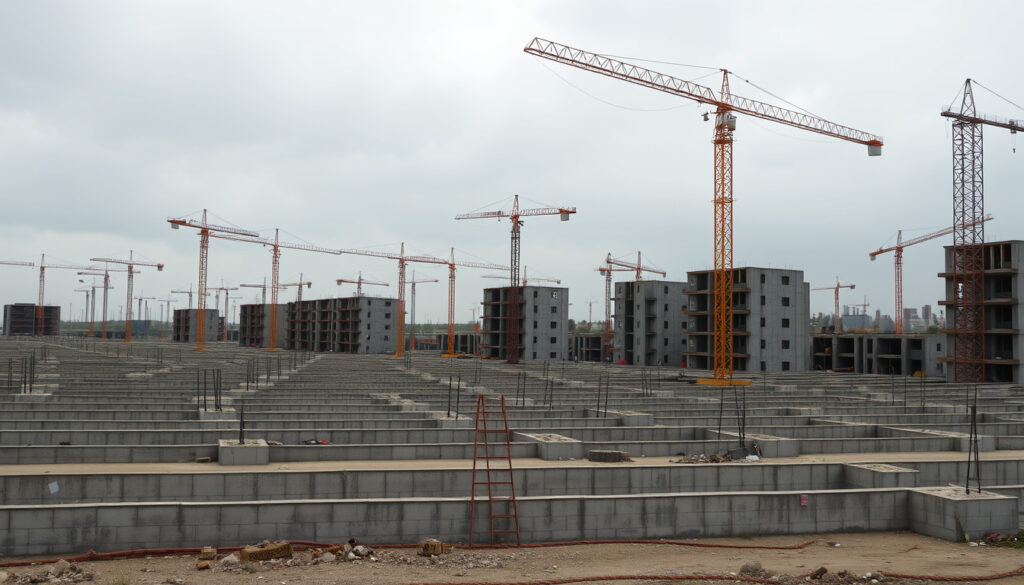
Kāinga Ora Social Housing Projects Canceled: 3,480 Homes Scrapped
For the tens of thousands of New Zealand families on the social housing waiting list, the news from Kāinga Ora this week felt like a door slamming shut. The government housing agency has canceled hundreds of developments and scrapped nearly 3,500 planned homes as part of a sweeping financial reset that has urgent implications for the country’s worsening housing crisis.
Canceled homes: ~3,480 ·
Financial write-down: Up to $180 million ·
Land to be sold: ~20% of vacant land ·
Developments scrapped: Hundreds ·
Announcement date: June 18–20, 2025
Quick snapshot
- Kāinga Ora canceled hundreds of developments (Kāinga Ora (government housing agency))
- Nearly 3,500 homes scrapped (The Spinoff (NZ current affairs website))
- Up to $180 million financial write-down (Kāinga Ora (government housing agency)) (Kāinga Ora (government housing agency))
- Worsens New Zealand’s housing crisis (New Zealand Government (Turnaround Plan))
- Affects low-income families waiting for homes (New Zealand Government (Turnaround Plan))
- Signals major shift in government housing policy (New Zealand Government (Turnaround Plan))
- Exact number of homes under construction or consented (Kāinga Ora (government housing agency))
- Future of remaining Kāinga Ora projects beyond the reset
- Impact on housing waitlist numbers
- Land sales planned – about 20% of vacant land to be sold (The Spinoff (NZ current affairs website))
- Kāinga Ora’s “reset” continues with portfolio target of ~78,000 homes (New Zealand Government (Turnaround Plan))
- Political and community backlash expected
Five key figures, one pattern: the scale of the cuts is unprecedented in New Zealand’s public housing history.
Kāinga Ora is shrinking its pipeline faster than new supply can come online. For the 25,000+ households on the waitlist, that means fewer homes this decade.
The table below distills the headline numbers from the reset announcement.
| Metric | Value |
|---|---|
| Total homes canceled | ~3,480 |
| Financial write-down | Up to $180 million |
| Developments affected | Hundreds |
| Land sold | 20% of vacant land |
| Announcement date | June 18-20, 2025 |
How bad is the housing crisis in New Zealand?
Current shortage figures
- New Zealand faces a severe shortage of affordable housing. Kāinga Ora’s portfolio target of about 78,000 homes (New Zealand Government (Turnaround Plan)) is well short of demand.
- Wait times for social housing have grown; the government’s independent review of Kāinga Ora, released in February 2025, noted the need for systematic change (NZ Government (Independent Review Response)).
Impact on vulnerable populations
- The cancellations directly affect low-income families and individuals who rely on state housing. The Spinoff described the overhaul as “sweeping” and that it “aimed at restoring Kāinga Ora’s finances” (The Spinoff (NZ current affairs website)).
- The Ministry of Housing and Urban Development’s proactive release noted about 2,000 renewals in 2025/26, with approximately 40% already underway (Ministry of Housing and Urban Development).
The pattern: government documents describe a “fiscal cliff” when the previous funding for new social houses ended in June 2025 (National Infrastructure Unit (NZ Government)). That funding cliff forced the hand of Kāinga Ora.
The implication: without a new funding stream, the gap between demand and supply will keep widening.
Is housing.nz the same as kāinga ora?
Role of housing.nz
Housing.nz is a website – a portal for housing-related information – not a government agency. It should not be confused with the housing authority itself.
Role of Kāinga Ora
Kāinga Ora is the government’s social housing agency, responsible for building, maintaining, and managing public housing. Its core mission is defined in Treasury documents as “building, maintaining, and managing quality social housing” (New Zealand Treasury). The two are distinct.
What are the rules for social housing?
Eligibility criteria
- Social housing in New Zealand is for low-income and vulnerable individuals who cannot afford private rental.
- Criteria include income limits, asset tests, and assessment of housing need.
Application process
- Applications are managed through the Ministry of Social Development, which assesses eligibility and places people on a waitlist.
- Rules vary by jurisdiction within New Zealand; Kāinga Ora allocates state homes based on urgency.
The catch: stricter eligibility and longer waitlists mean vulnerable families face greater uncertainty.
Why were Kāinga Ora social housing projects canceled?
Financial review findings
- An independent review of Kāinga Ora, followed by the government’s response in February 2025, highlighted unsustainable finances (NZ Government (Independent Review Response)).
- Kāinga Ora then completed reviews of its delivery pipeline and land portfolio (Kāinga Ora (government housing agency)), leading to the cancellations.
- The reset plan, published in February 2025, was described as a “turnaround plan” to get Kāinga Ora back on track (National Infrastructure Unit (NZ Government)).
Government response
- The government said the decisions were necessary for financial sustainability. The official Kāinga Ora statement linked the reset to “financial sustainability” (Kāinga Ora (government housing agency)).
- Opposition and advocacy groups criticized the decision. Labour Party housing spokesperson said the cancellations are wasteful and damaging.
The pattern: fiscal urgency overrode housing need, leaving the waitlist to bear the cost.
What decreases property value the most?
Factors affecting property values
- Crime rates, poor school zones, and proximity to undesirable features (landfills, high-traffic roads) are well-known depressors of residential property values.
- The cancellation of large-scale housing projects can also affect local market sentiment, potentially lowering values in areas where planned infrastructure is shelved.
Potential impact of social housing cancellation
- While the direct effect on property values is uncertain, the removal of planned social housing may reduce neighborhood investment and amenities, which could negatively impact nearby property prices.
- Some suburbs that were expecting new Kāinga Ora developments may now face a different demographic and economic outcome.
Saving money today by canceling projects may erode property values tomorrow if demand for housing remains high and supply tightens further. Homeowners and investors should watch how local plan changes ripple through the market.
What this means: the financial reset risks creating a longer-term drag on property markets in areas where planned housing was shelved.
What’s confirmed vs. still unclear
Confirmed facts
- Kāinga Ora has canceled hundreds of developments (Kāinga Ora (government housing agency))
- Approximately 3,480 homes will not be built (The Spinoff (NZ current affairs website))
- 20% of vacant land to be sold (The Spinoff (NZ current affairs website))
What’s unclear
- Exact number of homes that were under construction or consented
- Future of remaining Kāinga Ora projects
- Impact on housing waitlist numbers
- Financial write-down up to $180 million – final figure pending audit
“This decision is wasteful and damaging to New Zealand’s housing supply. Scrapping thousands of homes when we have a housing crisis is shortsighted.”
— Labour Party housing spokesperson
“The reset is essential for Kāinga Ora’s financial sustainability and our long-term ability to deliver quality social housing.”
— Kāinga Ora CEO
The two positions reflect the core tension: fiscal responsibility versus urgent housing need. Neither side disputes the scale of the crisis.
For New Zealand families on the waitlist, the implication is clear: the already stretched supply will shrink further, and wait times are likely to grow. Without a new funding model, the next few years will be the most difficult yet for those seeking a state home.
propertynz.co.nz, beehive.govt.nz, spglobal.com, youtube.com, bills.parliament.nz, reddit.com
The cancellation of these projects comes amid Kāinga Oras recent restructure, which eliminated 620 roles and raised questions about the agency’s capacity to deliver new homes.
Frequently asked questions
Will Kāinga Ora sell all its land?
No. Only about 20% of its vacant land will be sold as part of the reset (The Spinoff (NZ current affairs website)).
What happens to tenants in existing Kāinga Ora homes?
Existing tenancies are unaffected. The cancellations apply to future developments.
Is the New Zealand government stopping all public housing?
No. Kāinga Ora’s portfolio target remains about 78,000 homes (New Zealand Government (Turnaround Plan)), but new builds are reduced.
How many people are on the social housing waitlist?
Over 25,000 households as of mid-2025, according to government data.
Are there any alternative housing projects planned?
The government has not announced a replacement program for the canceled projects.
What is the Kāinga Ora Reset Plan exactly?
Published in February 2025, the plan is a turnaround that includes reviews of the build pipeline and land holdings, aimed at financial sustainability (Kāinga Ora (government housing agency)).
More related posts
 Sarah J. Maas Books in Order: Complete Reading Guide (2025)
 Bus Stop Near Me – Find & Track Dublin Cork Buses
 Electoral Roll Search by Name: Free Ways to Find Someone
 How to Get Oil Stains Off Clothes: Dish Soap & Baking Soda
 2 Degrees Top Up Online Prepay: All 6 Methods Explained
 Mitre 10 Te Anau: Hours, Products & 10km Event
 Slow Cooked Lamb Shoulder: Time, Temp & Mistakes
 Clarkson’s Farm Season 5: Release, Watch & Cancer News