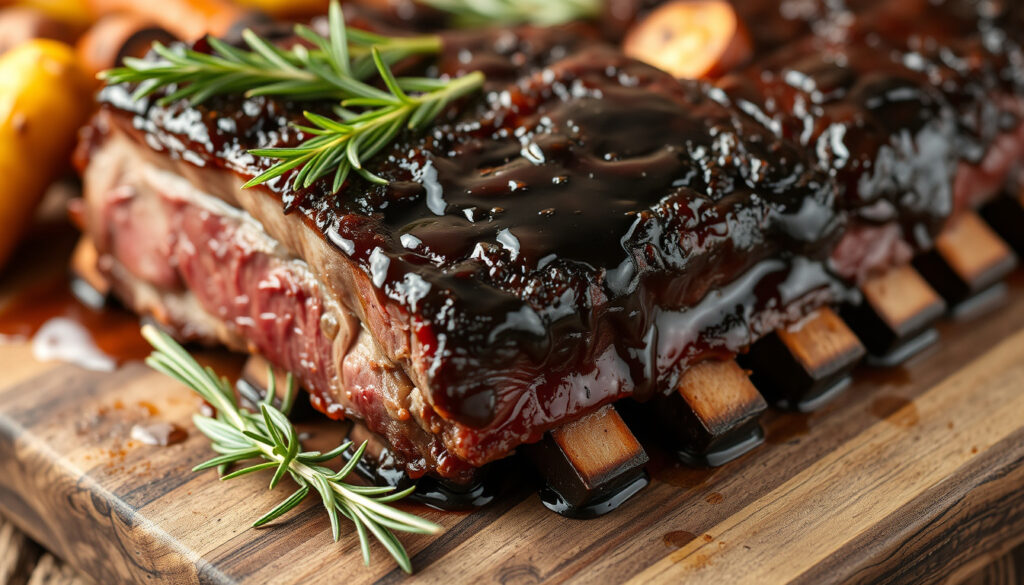
Beef Short Ribs Recipe: Best Way to Cook Tender, Flavorful Ribs
There’s a reason braised beef short ribs feel like a proper Sunday dinner: low, slow heat turns tough meat into something almost impossibly tender. Whether you’re new to the technique or looking to perfect it, this guide covers the best cooking methods, common mistakes, and the secrets to rich, fall-apart results—with a nod to Irish cuts and traditions.
Cooking Method: Braising · Total Time: 3-4 hours · Oven Temperature: 350°F (175°C) · Internal Doneness: 203°F (95°C) · Best Cut: English-cut short ribs
Quick snapshot
- Braising at 350°F for 3-4 hours yields fork-tender meat (RecipeTin Eats (recipe site))
- Searing before braising adds essential flavor (RecipeTin Eats (recipe site))
- English-cut bone-in ribs are best for braising (DeBragga (specialty butcher))
- Exact optimal cooking time varies by rib size and cut (Meat Church (BBQ brand))
- Whether marinating overnight is necessary (Kendall Andronico (food blog))
- Braise at 325-350°F for 2.5-5 hours depending on method and desired tenderness (DeBragga (specialty butcher))
- Internal temp of 203°F indicates collagen breakdown is complete (Meat Church (BBQ brand))
- Let ribs rest 10 minutes before serving for best texture (Jess Pryles (butcher/author))
- Pair with mashed potatoes or roasted vegetables to balance richness (Vindulge (food blog))
Four core facts, one takeaway: short ribs reward patience and proper technique, not shortcuts.
Here is how the key cuts compare for braising:
| Fact | Detail |
|---|---|
| Cut source | Beef short ribs are cut from the rib section, typically the chuck or plate. |
| Collagen content | High collagen content makes them ideal for slow braising. |
| Preferred cooking method | Braising at 350°F for 3-4 hours yields fork-tender meat. |
| Irish terminology | In Ireland, short ribs are often sold as ‘rib of beef’ or ‘beef ribs’. |
What is the best way to cook beef short rib?
The best method balances heat control and moisture. Braising—cooking in a covered pot with liquid—is the standard because it breaks down collagen without drying out the meat. Three reliable approaches:
Oven braising method
- Sear ribs in batches until deeply browned. RecipeTin Eats (recipe site) calls this step non-negotiable for flavor.
- Deglaze the pan with red wine and stock, then bring to a simmer.
- Cover and braise at 350°F for 3–4 hours until fall-apart tender. Barefoot Contessa (celebrity chef site) roasts first at 425°F, then lowers to 325°F for about 2 hours total, but most recipes suggest longer.
Home cooks who skip the initial high-heat sear lose the Maillard reaction that gives braised ribs their deep, savory crust. Without it, the dish can taste flat even after hours of cooking.
Slow cooker method
- After searing, transfer ribs to a slow cooker with braising liquid (stout, broth, aromatics).
- Cook on low for 6–8 hours or high for 3–4 hours. Jo Cooks (food blog) uses Guinness stout with tomato paste and herbs for a stout-braised version.
- The result is similar to oven braising but with hands-off convenience.
Dutch oven technique
- A heavy Dutch oven retains heat evenly. This is the preferred vessel for most braising recipes.
- Olive & Mango (food blog) coats ribs in flour before searing to help thicken the sauce.
- The tight-fitting lid traps steam, ensuring moist heat throughout the 3-hour cook.
The trade-off: oven and Dutch oven methods give you more control over browning and sauce reduction. Slow cookers are easier but can produce a less concentrated flavor because evaporation is minimal.
What are the common mistakes when cooking short ribs?
Even experienced cooks slip up. Here are the three most frequent errors and how to avoid them.
Overcooking or undercooking
- Short ribs need to cook until fork-tender, usually 3–4 hours at 350°F. Meat Church (BBQ brand) suggests 5 hours at 250°F for a smoker-style braise—proof that temperature and time are intertwined.
- Use an instant-read thermometer: the ideal internal temperature is 203°F (95°C), when collagen has fully converted to gelatin.
- After 4 hours, the meat can start to dry out or become mushy if the liquid level drops too low.
Not searing the meat
- Skipping the sear is the most common shortcut. RecipeTin Eats (recipe site) emphasizes aggressively browning the ribs in batches.
- The browned crust adds depth that no spice blend can replicate.
- Don’t crowd the pan—work in batches so each side gets direct heat contact.
Using the wrong cut
- English-cut short ribs (bone-in, cut between the ribs) hold up best to long braising. Flanken-cut (thin, across the bones) dries out quickly.
- DeBragga (specialty butcher) uses English-cut for their Irish whiskey short rib recipe, noting the bone adds both flavor and structure.
- Ask your butcher for “beef short ribs, English style” to get the right cut.
Flanken-cut ribs are often cheaper, but for braising they’re a false economy: the leaner meat dries out before collagen can break down. Stick with English-cut unless you’re grilling.
The implication: checking internal temperature and choosing English-cut ribs eliminate the two most common sources of failure.
What’s the secret to flavorful short ribs?
Flavor comes from layering: a good sear, a balanced braising liquid, and time. Three tactics make the difference.
Use a flavorful braising liquid
- A combination of red wine and beef stock is classic. Barefoot Contessa (celebrity chef site) builds hers with leeks, celery, onions, and carrots cooked for 20 minutes before adding wine.
- Jess Pryles (butcher/author) recommends reducing the wine by about half before adding stock—this concentrates sweetness without extra sugar.
Add aromatics and herbs
- Onion, garlic, carrot, and celery form the mirepoix base. Meat Church (BBQ brand) includes tomato paste for umami depth.
- Fresh thyme, rosemary, and bay leaves hold up well to long cooking.
- Irish-style versions often swap stout or whiskey for some of the wine. Vindulge (food blog) simmers short ribs in stout broth until fork-tender, a regional variant.
Marinate overnight
- Dry-brining the ribs with salt a day ahead helps seasoning penetrate. Kendall Andronico (food blog) advises salting and chilling for 1 to 2 days before cooking.
- While not strictly necessary, it improves depth of flavor.
- Marinating in wine or stout overnight can also tenderize further.
Why this matters: the braising liquid is the backbone of the dish. Without a well-built liquid—wine, stock, aromatics—the meat will taste like boiled beef, not deeply savory short ribs.
Do short ribs get more tender the longer they cook?
Yes—up to a point. The science of collagen breakdown determines the window.
Understanding collagen breakdown
- Collagen, a connective tissue, starts converting to gelatin at 160–180°F (71–82°C). Meat Church (BBQ brand) uses 250°F for 5 hours to slowly reach this zone.
- At 203°F (95°C), the conversion is essentially complete. The meat becomes tender, moist, and pulls apart easily.
- Cook times from 2.5 hours (at 325°F) to 5 hours (at 250°F) all work—the key is reaching that internal temp.
Optimal cooking time window
- Most recipes target 3–4 hours at 350°F. RecipeTin Eats (recipe site) uses about 3 hours for tender results.
- Jo Cooks (food blog) goes 2.5–3 hours for Guinness-braised ribs.
- DeBragga (specialty butcher) says 2.5 hours at 325°F yields fall-apart meat.
Risk of overcooking
- After 4 hours at 350°F, the meat can begin to dry out if the liquid level drops. The gelatin breaks down further, turning the sauce greasy and the meat stringy.
- Keep the braising liquid at least halfway up the ribs and check at 3 hours.
- If using a slow cooker, low heat for 6–8 hours is forgiving; high heat for 3–4 hours is safer.
The implication: you have a comfortable 2-hour window of ideal doneness. After that, watch the liquid and internal temp—don’t just set and forget.
What is the best cut of beef for slow cooking in Ireland?
Ireland’s grass-fed beef is well-marbled, but terminology can confuse shoppers. Here’s what to look for.
English cut vs flanken cut
- English-cut ribs are cut parallel to the bone, yielding individual thick strips with one bone each. This is the gold standard for braising.
- Flanken-cut ribs are cut across the bones, producing thin strips with several small bones. They cook faster but lack the collagen density for long braising.
- DeBragga (specialty butcher) recommends English-cut for Irish-style recipes.
Irish beef short rib terminology
- In Ireland, short ribs are often called “rib of beef” or simply “beef ribs” when sold at butchers or supermarkets.
- Irish grass-fed beef tends to be leaner but still well-marbled thanks to natural pasture diets.
- The rib bone adds flavor during braising; bone-in is preferred over boneless.
Where to buy Irish beef short ribs
- Ask for “short ribs, English style” at your local butcher. In Ireland, they may be pre-cut as “beef ribs” in trays.
- If grass-fed beef is available, it will have a deeper, slightly gamey flavor that pairs well with stout or red wine.
- DeBragga (specialty butcher) sources quality short ribs for their whiskey-braised recipe.
For home cooks in Ireland or elsewhere, the choice is clear: English-cut bone-in short ribs from grass-fed cattle give the best braising results. Don’t settle for flanken.
Confirmed facts
- Braising at 350°F for 3-4 hours yields fork-tender meat.
- Searing before braising improves flavor.
- English cut is best for braising.
What’s unclear
- Exact optimal cooking time varies by size and cut.
- Whether marinating overnight is necessary.
Quotes from the experts
“Cooked long and slow in a rich red wine sauce until the meat is fall-apart tender.”
RecipeTin Eats (recipe site)
“Roast the ribs first at 425°F, then braise them at 325°F for a total of about 2 hours.”
Both approaches share a core truth: patience and proper heat management separate great short ribs from tough ones.
Final takeaway
For the home cook, the decision is simple: choose English-cut short ribs, sear them hard, braise low and slow (350°F for 3–4 hours), and build a liquid with wine, stock, and aromatics. Skip the shortcuts. The reward is a plate of beef that justifies the wait—and makes any Sunday feel like an occasion.
Related reading: Slow Cooked Lamb Shoulder Guide · Homemade Nuts and Bolts Recipe
barefootcontessa.com, primaverakitchen.com, youtube.com, jesspryles.com, tastesbetterfromscratch.com
For those short on time, exploring oven, slow cooker, and Instant Pot methods can help you decide which appliance yields the best results.
Frequently asked questions
What is the difference between beef short ribs and beef back ribs?
Short ribs come from the chuck or plate section and have more meat and collagen. Back ribs come from the rib roast (prime rib area) and are thinner with less meat. Short ribs are better for braising.
Can I freeze cooked short ribs?
Yes. Cool the ribs in their braising liquid, then freeze in an airtight container for up to 3 months. Thaw overnight in the fridge and reheat gently on the stovetop.
How to reheat short ribs?
Place ribs and sauce in a covered pan at 300°F for 20–30 minutes, or simmer on the stovetop until warmed through. Add a splash of stock if the sauce has thickened too much.
What sides go with beef short ribs?
Mashed potatoes, roasted root vegetables, creamy polenta, or crusty bread are classic pairings. The rich sauce soaks into any carb beautifully.
Is it necessary to use wine?
No, but wine adds acidity and depth. You can substitute stout beer, beef stock, or a combination. For an Irish twist, use Guinness or whiskey in place of red wine.
Can I use a pressure cooker?
Yes. Cook on high pressure for 45–60 minutes, then natural release. The results are tender but the sauce won’t reduce as much; you may need to simmer it separately after cooking.
More related posts
 2026 Winter Olympics Snowboarding: Schedule, Venue, Lineup & Results
 Reading Cinemas New Lynn: Showtimes, Tickets, Menu & Hours
 Teacher Shares Confidential Student Data: Risks & Rules
 Fate of Ophelia Lyrics: Taylor Swift Full Song Text & Meaning
 How Much Is an Ounce? Grams, ML, & Gold Value Guide
 Omnilux LED Mask NZ: Reviews, Price & Where to Buy
 Death on the Nile 2022: Box Office, Ban & Worth Watching
 Olivia Dean NZ Tour 2026: Dates, Sold Out Status & What We Know