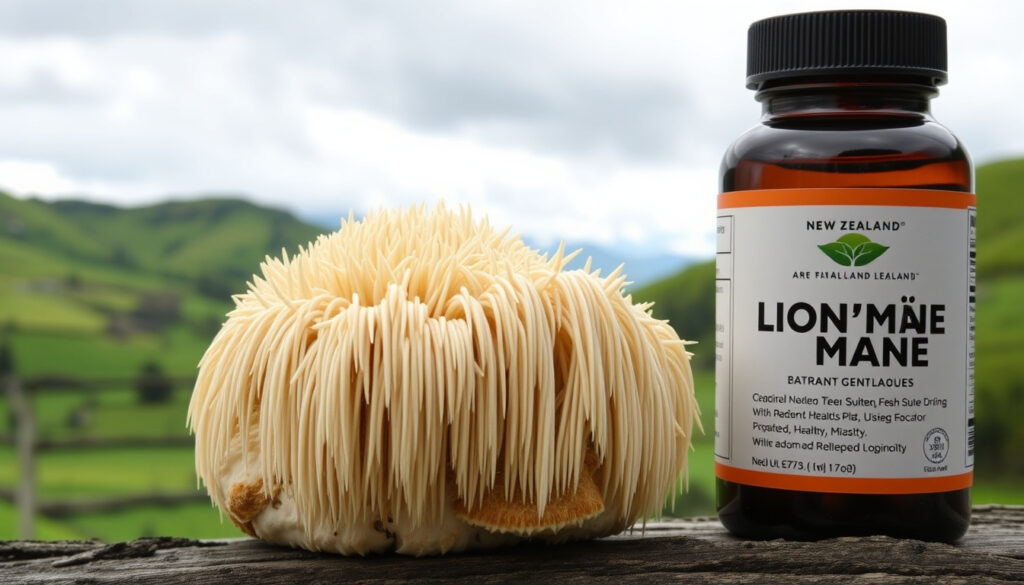
Lion’s Mane Supplement NZ: Benefits, Risks & Legality
You’ve probably seen Lion’s Mane supplements popping up on health store shelves and wondered if they’re worth the hype — or if they’re even legal here. This guide cuts through the marketing noise to give you the facts about Lion’s Mane in New Zealand, from what the science actually says to how to spot a quality product.
Active compounds: Hericenones and erinacines stimulate nerve growth factor (NGF) ·
Common dosage: 500–3000 mg per day ·
NZ-specific development: First NZ-grown extract with proven bioactives (Mynd, 2025) ·
Reported side effects: Mild digestive upset in some users ·
Legal status in NZ: Legal as a dietary supplement (not a controlled substance)
Quick snapshot
- Lion’s mane contains compounds that stimulate NGF in laboratory studies (PubMed Central (peer-reviewed research))
- Supplement is legal in New Zealand (Simply Nootropics NZ (NZ supplement retailer))
- Mild digestive side effects are possible (Healthline (consumer health publisher))
- Long-term effects beyond 12 months of daily use
- Optimal dosage for cognitive benefit in healthy adults
- Consistency of product quality among NZ retailers
- 2025: First NZ-grown extract with proven bioactives launched by Mynd (Mynd Mushrooms (NZ mushroom supplement brand))
- 2024: NZ retailers begin third-party testing for heavy metals (Flow State (NZ supplement brand))
- 2023: Consumer awareness of authenticity issues grows (Mycobio (NZ mushroom education site))
- More NZ-grown extracts expected as local cultivation develops
- Greater regulatory scrutiny likely as market grows
- Consumer demand for third-party testing will increase
Six key facts about Lion’s Mane supplements in New Zealand, one pattern: the science is promising but the market is still maturing, and quality varies widely between products.
| Attribute | Details |
|---|---|
| Scientific Name | Hericium erinaceus |
| Active Compounds | Hericenones, Erinacines |
| Common Form | Capsules, powder, tincture |
| Dosage Range | 500–3000 mg/day |
| Cost in NZ | $30–$60 per month |
| Legal Status | Legal dietary supplement |
The implication: the facts sheet above shows that Lion’s Mane is accessible and affordable, but the real test lies in product authenticity.
What does Lion’s Mane supplement do for you?
How does Lion’s Mane support brain health?
- Lion’s mane contains hericenones and erinacines that stimulate nerve growth factor (NGF) production, according to research from PubMed Central (peer-reviewed biomedical database).
- Studies suggest it may improve memory, focus, and mental clarity, as reported by Healthline (consumer health publisher).
- Some users report better concentration and reduced brain fog, though individual results vary.
- It is not a stimulant and does not produce a “buzz” — it works differently from caffeine or amphetamines.
What are the key active compounds?
- Hericenones and erinacines are the two main bioactive groups studied for neuroprotective effects, per Memorial Sloan Kettering Cancer Center (integrative medicine research).
- These compounds cross the blood-brain barrier and may support nerve regeneration in animal studies.
- A 2025 review in PubMed Central (peer-reviewed research) confirms these bioactives underpin research interest in neuroprotection.
Lion’s mane is not a quick fix — it targets the underlying biology of nerve health rather than providing a temporary boost. For NZ buyers seeking cognitive support, the real question is whether the product you’re buying actually contains the active compounds at meaningful levels.
The implication: Lion’s mane works on a different mechanism than stimulants, which means expectations need to match reality. It’s a long-term support tool, not a performance enhancer.
What are the downsides of taking lion’s mane?
Can lion’s mane cause side effects?
- Common side effects include mild digestive upset, nausea, or diarrhea, according to Healthline (consumer health publisher).
- Possible allergic reactions in people with mushroom allergies — start with a low dose if you’re sensitive.
- May interact with blood-thinning medications (theoretical risk based on animal studies).
Is lion’s mane safe for the liver?
- No evidence that lion’s mane harms the liver at recommended doses, per Memorial Sloan Kettering Cancer Center (integrative medicine research).
- A 2024 review in PubMed Central (peer-reviewed research) found no hepatotoxicity signals in human studies.
- Most side effects are gastrointestinal and resolve with continued use or dose adjustment.
NZ consumers buying from unverified online sellers face a different risk: not side effects from the mushroom itself, but contaminants or fillers in low-quality products. Third-party testing is your safeguard.
The trade-off: Lion’s mane is generally safe, but the lack of long-term human studies beyond 12 months means we don’t know everything. For most people, the risk is low — but if you’re on blood thinners or have a mushroom allergy, proceed with caution.
Is it worth taking lion mane supplements?
How does lion’s mane compare to ashwagandha?
- Lion’s mane primarily targets cognitive function and nerve health; ashwagandha addresses stress and cortisol levels, per Healthline (consumer health publisher).
- They are complementary rather than competing — some users take both for different reasons.
- Ashwagandha has more human trial data for stress reduction; lion’s mane has stronger preclinical evidence for nerve growth.
Who might benefit most from lion’s mane?
- Students and professionals seeking improved focus and mental clarity.
- Older adults interested in cognitive maintenance and nerve health.
- People recovering from mild cognitive decline or nerve injury (under medical supervision).
- Not recommended for pregnant or breastfeeding women due to lack of safety data.
The pattern: each supplement targets a different system — lion’s mane for cognition, ashwagandha for stress, and bacopa for memory — so the “best” choice depends on your specific goal.
| Supplement | Primary Benefit | Mechanism | Best For |
|---|---|---|---|
| Lion’s Mane | Cognitive function, nerve health | NGF stimulation | Focus, mental clarity, nerve support |
| Ashwagandha | Stress reduction, cortisol balance | HPA axis modulation | Anxiety, sleep, stress resilience |
| Bacopa Monnieri | Memory formation, recall | Antioxidant, acetylcholine | Learning, memory retention |
The catch: User testimonials vary widely — not everyone experiences noticeable effects. For NZ buyers spending $30–60 per month, the real value depends on product quality and consistency of use over 4–8 weeks.
Why this matters: If you’re comparing supplements, don’t ask “which is better” — ask “which matches my specific need.” Lion’s mane is a cognitive tool, not a stress solution.
Why is Lion’s Mane illegal in NZ?
Is NZ Lion’s Mane a fake product?
- Lion’s mane is not illegal in New Zealand; it is legal as a dietary supplement, confirmed by Simply Nootropics NZ (NZ supplement retailer).
- Some websites may sell counterfeit or low-quality products — buyer beware, warns Mycobio (NZ mushroom education site).
- Mynd developed the first NZ-grown extract with proven bioactives, reported by Mynd Mushrooms (NZ mushroom supplement brand).
- The “illegal” myth may stem from confusion with psychoactive mushrooms, which are controlled under NZ law.
What does NZ law say about mushroom supplements?
- Medsafe regulates medicines and medical devices in New Zealand, per Medsafe (NZ medicines safety authority).
- Dietary supplements, including lion’s mane, are not classified as medicines and do not require Medsafe approval.
- Some NZ growers report legislation affecting import and local cultivation of lion’s mane, according to Oak and Spore (NZ mushroom grower).
- Dried lion’s mane can be imported legally; fresh cultivation faces biosecurity restrictions.
Lion’s mane is legal to buy and sell in NZ, but some retailers may be selling a different mushroom species entirely. The “NZ Lion’s Mane scandal” highlighted by Mycobio in 2025 points to a market where authenticity is not guaranteed.
The pattern: The legality question is a red herring — the real issue for NZ consumers is product authenticity. Legal doesn’t mean authentic, and the market is still sorting itself out.
What happens when you take lion’s mane every day?
Is daily use safe?
- No significant safety concerns for long-term daily use in most people, per Memorial Sloan Kettering Cancer Center (integrative medicine research).
- Some users report gradual cognitive improvements over 4–8 weeks of consistent use.
- Cycling (e.g., 5 days on, 2 off) is common but not mandatory — there’s no evidence it improves outcomes.
- Consult a healthcare professional if you have a medical condition or take prescription medications.
How long before you see results?
- Most users report noticeable effects after 2–4 weeks of daily use.
- Maximum benefits may take 8–12 weeks, based on user reports and limited clinical data.
- Results depend on dosage, product quality, and individual biochemistry.
For NZ consumers, the cost of daily use ($30–60/month) needs to be weighed against the gradual, subjective nature of the benefits. This is not a supplement where you’ll feel a dramatic difference on day one.
What this means: Daily use is safe for most people, but patience is required. If you’re expecting instant results, you’ll be disappointed. If you’re looking for subtle, cumulative cognitive support over months, it may be worth the investment.
Confirmed facts vs. what’s unclear
Confirmed facts
- Lion’s mane contains compounds that stimulate NGF in laboratory studies (PubMed Central (peer-reviewed research))
- Supplement is legal in New Zealand (Simply Nootropics NZ (NZ supplement retailer))
- Mild digestive side effects are possible (Healthline (consumer health publisher))
- First NZ-grown extract with proven bioactives launched in 2025 (Mynd Mushrooms (NZ mushroom supplement brand))
What’s unclear
- Long-term effects beyond 12 months of daily use
- Optimal dosage for cognitive benefit in healthy adults
- Consistency of product quality among NZ retailers
- Whether all “lion’s mane” products sold in NZ contain authentic Hericium erinaceus
Expert perspectives
“Lion’s mane components (hericenones, erinacines) have been studied for their potential to stimulate nerve growth.”
— Memorial Sloan Kettering Cancer Center (integrative medicine research)
“First New Zealand lion’s mane mushroom extract with proven bioactives – developed by Mynd.”
— Mynd Mushrooms (NZ mushroom supplement brand), as reported by NZ Herald, 2025
“Lion’s mane may affect heart-disease risk factors such as triglycerides and cholesterol oxidation.”
— Healthline (consumer health publisher)
“A New Zealand FAQ page recommends a daily amount of roughly 1 to 2 grams for a lion’s mane supplement.”
— Mynd Mushrooms (NZ mushroom supplement brand)
Summary
Lion’s mane is a legal, generally safe supplement with promising preclinical evidence for cognitive and nerve health — but the NZ market is still maturing, and product quality varies. Kiwi consumers should buy from brands that provide third-party testing results and proven bioactive content, or risk paying for a product that may not contain what it claims.
Related reading: lion’s mane mushroom supplements · Is NZ Lion’s Mane a fake?
For New Zealanders considering this nootropic, understanding the full profile of Lions Mane supplement benefits helps in making an informed choice about local brands and legal status.
Frequently asked questions
How long does it take for lion’s mane to work?
Most users report noticeable effects after 2–4 weeks of daily use, with maximum benefits potentially taking 8–12 weeks. Results depend on dosage, product quality, and individual biochemistry.
Can I take lion’s mane with other supplements?
Yes, lion’s mane is generally safe to combine with other supplements. It pairs well with ashwagandha for stress support or bacopa for memory. Always check with a healthcare professional if you’re taking multiple supplements.
Is lion’s mane safe for children?
There is insufficient research on lion’s mane safety in children. It is not recommended for minors without medical supervision.
Does lion’s mane interact with antidepressants?
Theoretical interactions exist, particularly with blood thinners and medications metabolized by the liver. Consult your doctor before combining lion’s mane with prescription medications.
What is the difference between lion’s mane and nootropics like modafinil?
Lion’s mane is a natural supplement that supports nerve growth factor production over time, while modafinil is a prescription stimulant that promotes wakefulness. They work through completely different mechanisms and have different safety profiles.
Can lion’s mane help with anxiety?
Some animal studies suggest anti-inflammatory effects that may reduce anxiety symptoms, per Vinmec (healthcare provider). Human evidence is limited, and lion’s mane should not replace prescribed anxiety treatments.
Should I cycle lion’s mane supplements?
Cycling (e.g., 5 days on, 2 off) is common but not mandatory. There is no evidence that cycling improves outcomes or prevents tolerance. Consistency matters more than cycling.
More related posts
 How Much Is an Ounce? Grams, ML, & Gold Value Guide
 The Happiest Man on Earth: True Story, Summary & Movie Guide
 Hot Water Heat Pumps – Cost-Effective Water Heating
 Things to Do in Paihia – Bay of Islands Guide 2025
 OPI Nail Polish NZ: Where to Buy, Best Shades & Prices (2025)
 Death on the Nile 2022: Box Office, Ban & Worth Watching
 Find a Grave NZ: Free Online Cemetery Records Search Guide
 Hunt for Gollum: Release Date, Cast, and Aragorn Recast