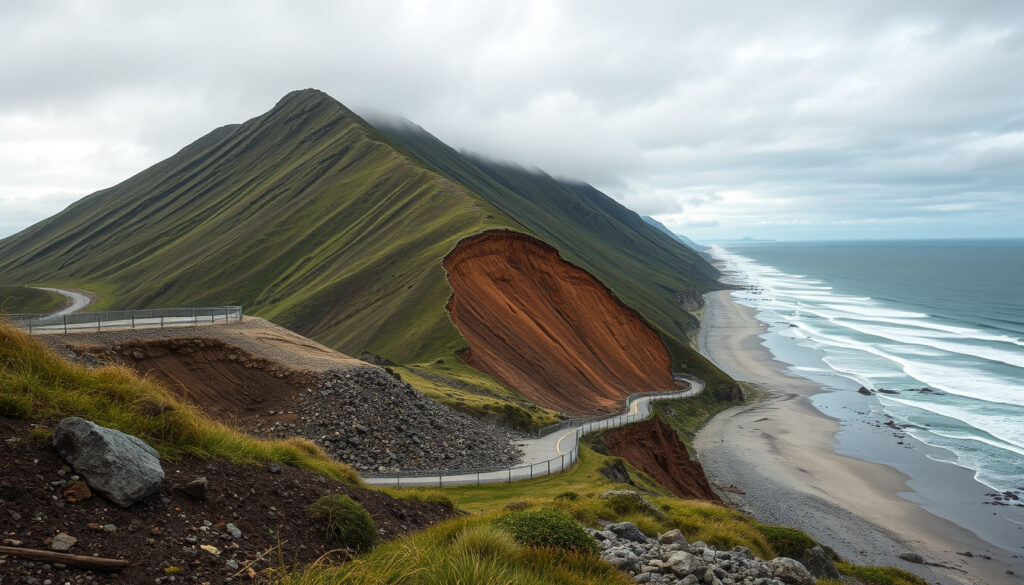
Mount Maunganui Slip Update: Deaths, Recovery & Reopening
The morning of January 22, 2026 began like any other summer morning at Mount Maunganui, with holidaymakers enjoying the coast and walkers heading up Mauao’s tracks. By 9:30am, six people were dead and New Zealand had recorded its deadliest weather event of the year. What followed was an 11-day recovery operation that concluded on February 1, 2026.
Deaths: 6 ·
Landslides: 42 ·
Recovery End: Feb 1, 2026 ·
Missing: 0 (operations concluded) ·
Location: Mauao above Mount Maunganui Beachside Holiday Park
Quick snapshot
- 6 deaths at Beachside Holiday Park (1News New Zealand)
- Recovery operations ended Feb 1, 2026 (Tauranga City Council)
- All six victims formally identified (Tauranga City Council)
- Official cause of landslide pending government inquiry
- No confirmed reopening date for Mauao tracks
- Timeline for base track remediation not yet announced
- 274mm rain fell in 24 hours before disaster (Debbie McCauley Author)
- State of Local Emergency declared Jan 21, 12:42pm (Debbie McCauley Author)
- Recovery paused Jan 26 over crack concerns (Debbie McCauley Author)
- Physical remediation work scheduled to begin weeks from April 2026 (Newsbeat (Tauranga City Council))
- Staged reopening guided by geotechnical advice (Newsbeat (Tauranga City Council))
- Government inquiry into causes expected (Newsbeat (Tauranga City Council))
Key facts about the January 2026 Mauao landslide are compiled in the table below.
| Detail | Value |
|---|---|
| Event | Mauao Landslide |
| Date | January 22, 2026 |
| Deaths | 6 |
| Total Landslides | 42 |
| Severe Hazards | 12 |
| Recovery End | Feb 1, 2026 |
What caused the Mount Maunganui slip?
The disaster struck after an extraordinary rainfall event. Tauranga received 274mm of rain in the 24 hours to 9am on January 22, 2026—equivalent to two and a half months of typical rainfall. Of that, 198mm fell in just the 12 hours to 6am that morning, according to Debbie McCauley Author (documenting natural heritage events).
Witness accounts
The landslide hit the Beachside Holiday Park at 9:29-9:30am, described by witnesses as a wall of mud and rock. A State of Local Emergency had already been declared for the entire Bay of Plenty region at 12:42pm the previous day, but nothing prepared campers for what came next.
Official investigations
A government inquiry has been launched to examine the causes of the landslide. Mauao now has 42 identified landslides, including 12 classified as severe, according to Newsbeat (Tauranga City Council).
The volume of rainfall in such a short period created conditions that overwhelmed Mauao’s slopes—geotechnical experts are now assessing whether anything could have reasonably predicted or prevented this outcome.
How many people died in the Mount Maunganui landslide?
Six people died when the landslide struck the Mount Maunganui Beachside Holiday Park on January 22, 2026. The victims included teenagers, a school tutor, a Swedish tourist, a grandmother, and a 10-year-old grandson, according to NZ Herald (New Zealand’s major news outlet).
Victim count
The death toll of six makes this the deadliest single landslide event in New Zealand’s recent history. All six victims were formally identified by police.
Full list of victims
The sixth and final victim, Jackie Wheeler, 71 years old from Roto Roua, was formally identified on February 1, 2026. Susan Nolles, a friend of Jackie Wheeler, was also killed in the landslide and identified the same day, according to YouTube (Police/Media).
Are any bodies recovered from Mt Maunganui slip?
Yes. Recovery operations concluded on February 1, 2026, after all six victims were formally identified. Police stood down all recovery operations at Mount Maunganui on that date, according to Tauranga City Council (official government source).
Recovery operations
Fire and Emergency New Zealand formally handed over the recovery operation to police at 11:20am on January 24, 2026. Police used hundreds of specialised staff across multiple workgroups, with officers travelling from several districts to assist, according to 1News New Zealand (public broadcaster).
Human remains found
Human remains were found during the night of January 23, 2026 at the landslide site. Assistant National Commander David Guard stated that day that the operation would continue until the search was complete. The recovery was paused on January 26 due to concerns about another slip and a crack discovered on the Mount—geotechnical experts were consulted before work resumed.
Identifying missing persons was hampered by people who had left the site earlier without informing authorities—a complication that prolonged uncertainty for families waiting for news.
How many people are still missing in Mount Maunganui landslide?
Zero. All six people reported missing following the landslide have been accounted for. Operations concluded on February 1, 2026, with no one remaining unaccounted for.
Missing persons update
Police indicated early in the operation that recovery could last many days and possibly extend to weeks. Bay of Plenty district commander Superintendent Tim Anderson stated police did not have a timeline on when recovery work would be complete, according to 1News New Zealand.
Search suspension
The operation paused briefly on January 26 when a crack was discovered on the mountain, raising fears of another landslide. Work resumed after geotechnical assessment gave the all-clear. Charlie Tawhio of Ngāi Te Rangi noted that iwi support was providing cultural and spiritual support to recovery workers throughout.
The extended recovery period reflects both the scale of the debris and the care taken to recover every person while protecting responders from secondary hazards on an unstable slope.
Is the Mount Maunganui base track open?
No. Mauao remains closed while recovery and remediation work continues, with safety as the overriding consideration, according to Newsbeat (Tauranga City Council).
Track status
The Base Track at Mauao cannot safely be reopened early in the recovery process. Physical remediation work was due to start in the coming weeks as of April 20, 2026.
Alternative walks
Summit access to Mauao is expected to be easier to restore than the Base Track, but no confirmed reopening date has been set. Reopening will be staged and evidence-based, guided by specialist geotechnical advice. Tauranga City Council and the Mauao Trust established a partnership called Ngā Poutiriāo ō Mauao for joint decision-making on reopening.
Timeline of the Mount Maunganui landslide
Six key moments that shaped the disaster response.
| Date | Event |
|---|---|
| Jan 21, 2026 | State of Local Emergency declared for Bay of Plenty at 12:42pm |
| Jan 22, 2026 | Landslide strikes Mount Maunganui Beachside Holiday Park, 6 killed |
| Jan 23, 2026 | Human remains found; Assistant National Commander David Guard confirms search continues |
| Jan 24, 2026 | Fire and Emergency New Zealand hands over recovery to police at 11:20am |
| Jan 26, 2026 | Recovery paused due to crack discovered on Mauao; geotechnical experts consulted |
| Feb 1, 2026 | Recovery operations stand down after all six victims formally identified |
What we know vs what remains unclear
The facts around Mauao’s January 2026 landslide are well-documented, but important questions remain unanswered.
Confirmed
- 6 deaths at Beachside Holiday Park
- 274mm rainfall in 24 hours before disaster
- Recovery concluded February 1, 2026
- 42 landslides identified across Mauao
- 12 classified as severe hazards
- All victims formally identified
Unclear
- Official cause pending government inquiry
- No confirmed track reopening date
- Timeline for base track remediation unknown
- Whether additional safety measures will be implemented
Expert perspectives
“The sound of mayhem” — Eyewitness describing the moment the landslide hit
“The operation would continue until the search was complete” — Assistant National Commander David Guard, January 23, 2026
“Safety as the overriding consideration” — Tauranga City Council, April 2026 update on Mauao reopening
Police staff from several districts travelled to Mount Maunganui to assist with the recovery operation, which drew on hundreds of specialised personnel across multiple workgroups. Iwi support through Ngāi Te Rangi provided cultural and spiritual assistance to recovery workers throughout the operation.
Summary
The Mauao landslide claimed six lives on January 22, 2026, after extreme rainfall—274mm in 24 hours—destabilised the iconic Tauranga peak. Recovery operations ran for 11 days before concluding February 1, with all victims formally identified. For hikers and residents awaiting Mauao’s reopening, the wait continues: 42 identified landslide scars require remediation, the base track remains unsafe, and no reopening timeline exists. A government inquiry may eventually explain why this happened, but the immediate future belongs to contractors and geotechnical specialists whose remediation work will determine when Mauao can safely welcome visitors again.
Related reading: Mount Maunganui Surf Report · Tauranga Airport Flight Updates
As recovery from the tragic slip concludes and the base track remains closed, Mount Maunganui eyes the Black Clash 2026 teams set for Bay Oval on January 17.
Frequently asked questions
What is the latest Mount Maunganui slip update?
Recovery operations concluded on February 1, 2026. All six victims were formally identified. Physical remediation work was scheduled to begin in the coming weeks as of April 2026.
When did the Mount Maunganui landslide occur?
The landslide struck the Beachside Holiday Park at 9:29-9:30am on January 22, 2026.
When will Mount Maunganui reopen?
No confirmed reopening date has been set. The base track cannot be reopened early in the recovery process. Summit access may be easier to restore first. Reopening will be staged and evidence-based.
Is Mount Maunganui open?
No. Mauao remains closed while recovery and remediation work continues.
How many deaths in Mt Maunganui slip?
Six people died in the landslide at Mount Maunganui Beachside Holiday Park on January 22, 2026.
What happened in Mount Maunganui landslide?
A landslide struck the Beachside Holiday Park at the base of Mauao on January 22, 2026, after extreme rainfall. Six people were killed. Recovery operations ran for 11 days.
Is there a landslide in Tauranga today?
No new landslides have been reported as of the latest updates. The January 22 disaster is the most significant recent event. Mauao remains closed as a precaution with 42 identified landslide scars.
More related posts
 Queen Duvet Cover NZ: Best Retailers, Sizes, and Prices (2025)
 Brooks Adrenaline GTS 24 Review: Stability for Runners
 How Big is A1 Paper? Dimensions in mm, cm, Inches & Comparisons
 Air New Zealand Review: Is it a Good Airline for Your Trip
 Roblox.com/redeem Code: How to Redeem (2025)
 Pre Purchase House Inspection: Costs, Red Flags & Guide Ireland
 BRB Hazy Pale Ale: Taste, Nutrition & Where to Buy