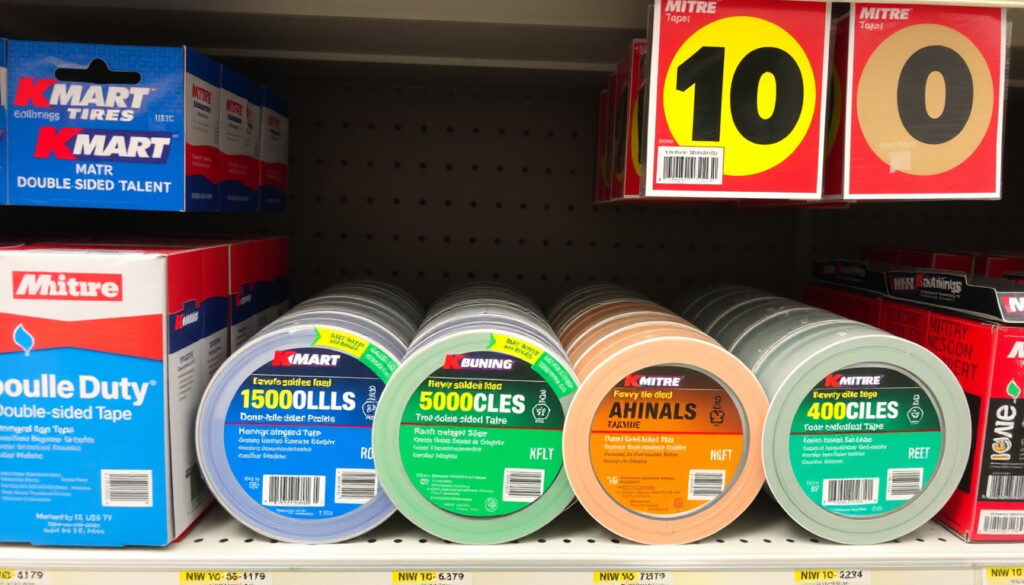
Double Sided Tape NZ: Strongest at Kmart, Bunnings, Mitre 10
If you’ve ever watched a heavy mirror slide halfway down a wall before catching it by sheer luck, you already know that not all double-sided tape is built the same. New Zealand shoppers have access to some genuinely strong options at major retailers—but the gap between a product labeled “heavy duty” and one that actually holds under pressure is wider than the tape roll itself. This guide benchmarks what the local market actually stocks, which brands deliver on their strength claims, and where the real load limits sit.
Top load capacity: 13.6kg / 30lb (Scotch Extreme) · Key retailers: Kmart, Bunnings, Mitre 10 · Common sizes: 19mm x 13.7m · Weather resistant: Yes, indoor/outdoor · Brand leader: 3M
Quick snapshot
- Gorilla tape availability at NZ stores unconfirmed
- Specific stock status at Mitre 10 and Bunnings not verified
- Customer failure rates or review data not publicly available
- 3M VHB remains industry standard for permanent bonds
- OHUG UHB gaining traction as NZ-sourced RP45 replacement
- Consumer demand driving wider heavy-duty tape range at Kmart
- Choose 3M VHB for permanent structural bonds
- Choose Scotch Extreme for consumer mounting at 13.6kg capacity
- Clean and degrease surfaces before any application
| Spec | Value |
|---|---|
| Max hold weight | 13.6kg / 30lb |
| Popular width | 19mm / 25mm |
| Length standard | 13.7m (3M VHB) / 1.5m (Scotch) |
| Thickness | 1.1mm (3M VHB 5952) |
| Key feature | Weather resistant, permanent bond |
| Retail leaders | Kmart, Bunnings, Burnsco |
| Scotch Mount price | $15 per roll |
What is the strongest double-sided tape in Australia?
While the question specifically mentions Australia, NZ buyers are in luck—the strongest tapes are available locally, and the technology crosses the Tasman. The current load-capacity champion on NZ retail shelves is Scotch Mount Double-Sided Extreme Mounting Tape, which holds 13.6kg per roll according to its Kmart NZ listing. That rating puts it in genuinely heavy-duty territory, well beyond the 1–3kg that consumer tapes typically advertise.
Heavy duty options in NZ
For jobs that go beyond hanging a picture frame, the options tighten. 3M VHB (Very High Bond) tapes lead the professional grade—these acrylic foam tapes replace mechanical fasteners entirely. According to 3M New Zealand, VHB tapes are “proven alternatives to traditional fastening methods — replacing rivets, screws, bolts and welds.” That is not marketing exaggeration; the engineering documentation from Burnsco shows the 3M VHB 5952 measures 19mm wide by 13.7m long with a 1.1mm thickness.
NZ-based OHUG manufactures an Ultra High Bond tape positioned as a direct replacement for 3M RP45 Series. OHUG states the tape “is strong enough to replace mechanical fasteners and adhesives — such as screws, bolts, rivets, and high-tack glues.” For buyers who want a locally sourced option, OHUG fills that gap.
VHB vs standard tapes
The fundamental difference comes down to chemistry and construction. Standard double-sided tape uses a thin adhesive layer on a carrier. VHB tapes use modified acrylic adhesive on a soft acrylic foam core, which allows the tape to conform to irregular surfaces and distribute load stress across the entire bonded area rather than at a single point.
For flat-to-flat bonding on smooth surfaces, a quality consumer tape like Scotch Extreme may suffice. For anything mounted on textured surfaces, outdoors, or under load stress, VHB’s conformability becomes essential, not optional.
The implication is straightforward: match the tape grade to the consequence of failure. A mirror falling costs less than a sign falling — budget accordingly.
What’s better, 3M tape or Gorilla tape?
The honest answer is that these products target different use cases, so “better” depends entirely on what you’re bonding. 3M VHB is engineered for permanent structural bonds in industrial, marine, and construction applications. Gorilla tape is a fabric-reinforced duct-style tape optimized for temporary repairs, outdoor weatherproofing, and holding where fasteners cannot reach.
Strength tests
3M VHB tapes deliver what the manufacturer calls “ultimate bond strength” per 3M New Zealand. The tape bonds to painted surfaces, metals, glass, and textured substrates with high heat resistance. In contrast, Gorilla tape prioritizes tear resistance and weatherproofing over load capacity.
For NZ buyers specifically: Gorilla tape is widely available online and in some retail stores, but documented availability at major chains like Mitre 10 or Bunnings remains unconfirmed in current research. 3M VHB products, by contrast, are confirmed stocked at Burnsco with specific dimensions listed.
Use cases for NZ buyers
Choose 3M VHB when permanence matters and surface preparation can be done properly. Choose Gorilla for outdoor patching where you need the tape to survive NZ weather without peeling. The two products do not directly compete—they solve different problems.
For mounting shelves, wall organization, or signage where you never want to drill holes, 3M VHB or Scotch Extreme are the right call. For temporarily holding a tarp in place or repairing a duct joint, Gorilla tape wins by default because VHB is unnecessarily expensive for temporary work.
What this means: selecting between these products hinges on whether the project demands permanence or flexibility. Commit to the bond upfront or accept the trade-off of a weaker hold.
What is the best tape for gauze on skin?
This question surfaces regularly in first-aid and wound-care contexts, and the direct answer is: no heavy-duty mounting tape belongs near skin. The adhesives formulated for structural bonding are not designed for skin compatibility, and attempting to use them for medical purposes risks skin damage, allergic reaction, and painful removal.
Skin-safe adhesives
Medical-grade tapes use hypoallergenic acrylic adhesives specifically tested for skin contact. These are entirely different formulations from mounting tapes. Products like Micropore paper tape or Medipore soft cloth tape are designed for repeated application and gentle removal from hairy skin.
If you need to secure gauze or a dressing, use a tape explicitly labeled for medical or first-aid use. The price difference is minimal, and the difference in skin safety is enormous.
Medical vs craft tapes
The overlap between craft and medical applications is small. Double-sided carpet tape, mounting tape, and VHB tapes are all engineered for inanimate surfaces. Medical tapes are designed for living tissue, which means the adhesive chemistry must balance hold with removeability in ways that structural tapes never need to address.
Applying Scotch Extreme or 3M VHB to skin will not create a useful bond and will almost certainly cause irritation or epidermal damage on removal. Keep structural tapes on surfaces, not skin.
The pattern is clear: structural adhesives and living tissue are fundamentally incompatible. Reaching for the wrong tape type in a first-aid situation creates unnecessary harm.
Can 3M VHB tape be removed?
3M VHB is explicitly designed as a permanent bonding solution, so removal requires deliberate effort and the right technique. According to Burnsco, proper surface preparation before application involves cleaning and degreasing—steps that also indicate how permanent the bond is intended to be.
Removal methods
Two primary removal approaches exist for VHB tape:
- Heat application: Warming the tape with a heat gun or hair dryer softens the acrylic adhesive, allowing the tape to be peeled away. This is the least damaging method for the substrate.
- Solvent application: Adhesive removers containing citrus compounds or isopropyl alcohol can dissolve the bond. Test on an inconspicuous area first, as some solvents may damage painted surfaces.
Damage risks
Removal almost always carries some risk to the substrate. On painted gyprock, heat and solvent application may lift paint. On metal, the risk is lower but adhesive residue requires cleanup. On glass, most removal methods are safe with proper technique.
If you anticipate needing removal, consider a less permanent alternative at the application stage. Once VHB has fully cured—typically 72 hours at room temperature—removal without substrate damage becomes increasingly difficult.
VHB’s permanence is a feature for structural bonding, not a limitation you work around. Choosing VHB means committing to the bond. If the project might need future disassembly, Scotch Extreme’s slightly lower bond strength may actually be an advantage—it bonds firmly but releases more easily than VHB.
The implication: VHB permanence is a feature, not a bug. Choose it only when the bond is meant to outlast the project.
Why does my double-sided tape keep falling off?
In most cases, the tape is not the problem—the surface preparation is. Double-sided tape bonds by adhesive contact with the substrate. Any contaminant, texture irregularity, or moisture interferes with that contact, and the bond fails at load far below the tape’s rated capacity.
Surface prep tips
The sequence for reliable adhesion:
- Clean the surface with isopropyl alcohol or a degreasing cleaner
- Allow the surface to dry completely—no moisture under the tape
- Avoid touching the adhesive surface with bare fingers (skin oils transfer)
- Apply firm, even pressure across the entire tape surface during installation
- Allow full cure time before loading (typically 24–72 hours for maximum bond)
Common failure causes
Temperature and humidity deserve special attention in NZ conditions. Many NZ homes have inadequate insulation, meaning interior walls can cool below the dew point in winter. Condensation on walls before application creates a moisture barrier between adhesive and substrate. Burnsco’s installation guidance specifically emphasizes cleaning and degreasing for 3M VHB applications—advice that applies equally to consumer-grade tapes.
Surface type matters significantly. Scotch Mount tape is designed for painted gyprock, painted wood, metal, acrylic, smooth stone, and painted concrete per the Kmart NZ product listing. Applying it to unprimed plaster, vinyl wallcovering, or textured surfaces will reliably fail.
Double-sided tape’s ease of use is also its weakness: the application looks simple, so people assume it works without preparation. But a tape rated for 13.6kg will only deliver 2kg of actual hold on a dirty, cold, or textured surface. The investment in 60 seconds of surface prep is what unlocks the rated capacity.
Product comparison
Four products dominate the NZ market across different price points and use cases. Each occupies a distinct position in the consumer-to-professional spectrum.
| Product | Load capacity | Best surface | Removability |
|---|---|---|---|
| Scotch Mount Extreme | 13.6kg | Painted gyprock, metal | Difficult after full cure |
| 3M VHB 5952 | Structural bond | Metals, glass, painted surfaces | Permanent |
| OHUG UHB | Replaces mechanical fasteners | Multiple substrates | Permanent |
| Primepac general purpose | Light to medium | General surfaces | Easier removal |
The pattern across these products is a direct trade-off between bond strength and removability. Scotch Extreme offers the best balance for consumers who may need eventual removal, while VHB and OHUG commit to permanent applications.
Detailed specifications
Specific measurements help buyers match tape dimensions to their project requirements and available clearance spaces.
| Product | Width | Length | Thickness | Price |
|---|---|---|---|---|
| Scotch Mount Extreme | 25mm | 1.5m | N/A | $15 |
| 3M VHB 5952 | 19mm | 13.7m | 1.1mm | Market rate |
| OHUG UHB | Various | Various | Heavy grade | Direct from OHUG |
| Primepac mounting | Various | Various | Foam or tissue | Direct from Primepac |
Pros and cons
Upsides
- Scotch Extreme delivers verified 13.6kg capacity at $15 — strong value for consumer use
- 3M VHB replaces mechanical fasteners, eliminating drilling and visible hardware
- OHUG UHB offers NZ-manufactured alternative to imported 3M equivalents
- Weather-resistant formulations work both indoors and outdoors
- Acrylic foam conformability handles slightly irregular surfaces
Downsides
- Full bond strength requires 24–72 hour cure time before loading
- Removal from painted surfaces risks substrate damage
- Specific Mitre 10 and Bunnings stock availability unconfirmed in current data
- Gorilla tape availability at NZ retailers unclear
- Not suitable for skin or medical use — different products required
The catch: the strongest tapes demand the most patience and commitment. Budget both cure time and the understanding that removal may damage the surface.
What experts say
OHUG’s Ultra High Bond Heavy Duty Double-Sided Tape (UHB) is strong enough to replace mechanical fasteners and adhesives — such as screws, bolts, rivets, and high-tack glues.
— OHUG (Manufacturer)
For your toughest jobs, go for our strongest hold — Scotch Extreme Double-Sided Mounting Tape with its 3M industrial strength adhesive.
— Kmart NZ / Scotch (Retailer/Product)
These high-strength, double-sided acrylic foam tapes are proven alternatives to traditional fastening methods — replacing rivets, screws, bolts and welds.
— 3M New Zealand (Manufacturer)
Related reading: Mitre 10 Solar Lights
NZ fans of heavy-duty 3M VHB tape from Bunnings will appreciate insights into double sided sticky tape picks that rival local strengths for crafts and repairs.
Frequently asked questions
Is double sided tape suitable for outdoor use in NZ?
Yes — weather-resistant formulations like Scotch Extreme and 3M VHB are designed for both indoor and outdoor use. The modified acrylic adhesives hold up to NZ UV levels and temperature swings. Always verify the specific product is labeled weather-resistant before outdoor application.
What surface prep improves double sided tape adhesion?
Clean with isopropyl alcohol or degreasing cleaner, allow full drying time, avoid touching adhesive with bare fingers, and apply firm even pressure during installation. Allow 24–72 hours before placing load on the bond.
Are there removable double sided tapes for skin?
Yes — medical-grade tapes like Micropore or Medipore are designed for skin contact with gentle removal. Structural mounting tapes are not safe for skin application. The two product categories use entirely different adhesive chemistries.
How much weight can heavy duty double sided tape hold?
Scotch Mount Extreme is verified at 13.6kg per roll in the Kmart NZ listing. 3M VHB tapes achieve structural bond strength that replaces mechanical fasteners, though exact load ratings vary by specific tape formulation and application surface.
Where is Warehouse Stationery double sided tape sold?
Warehouse Stationery sells double sided tape and adhesives online through their website with a price promise. Their range focuses on craft and office applications rather than heavy-duty mounting grades.
Does temperature affect double sided tape strength?
Yes. Standard acrylic adhesive tapes lose load capacity at temperatures above 90°C. For high-heat environments, specialized VHB formulations offer improved thermal resistance. Cold temperatures slow initial adhesion — allow extra cure time in winter conditions.
What makes VHB tape different from regular double sided?
VHB (Very High Bond) uses modified acrylic adhesive on a soft acrylic foam core rather than a thin adhesive layer on a solid carrier. The foam core allows the tape to conform to irregular surfaces and distribute load stress across the full bonded area, which explains the substantially higher load capacity compared to standard tapes.
For NZ buyers weighing their options, the choice crystallizes around permanence and load requirements. If you need a permanent structural bond, 3M VHB or OHUG UHB deliver proven performance with documented load capacity. If you want reliable consumer-grade mounting at an accessible price, Scotch Mount Extreme at $15 from Kmart delivers a verified 13.6kg hold with the ease of a retail purchase.
More related posts
 Christmas Eve Lotto Jackpot – $1.8B Powerball Win in Arkansas
 Money Transfer to India: Best Ways, Limits & Tax-Free Guide
 Brooks Adrenaline GTS 24 Review: Stability for Runners
 Icon of the Seas: Cost, Size & Itineraries (2025)
 Smith & Smith Rolleston: Windscreen Repair & Replacement
 USB-C to Lightning Cable: Guide to Compatibility & Uses
 Southern Cross Pet Insurance Claim: How to File & Track
 Death Notices Palmerston North: Find Obituaries Online