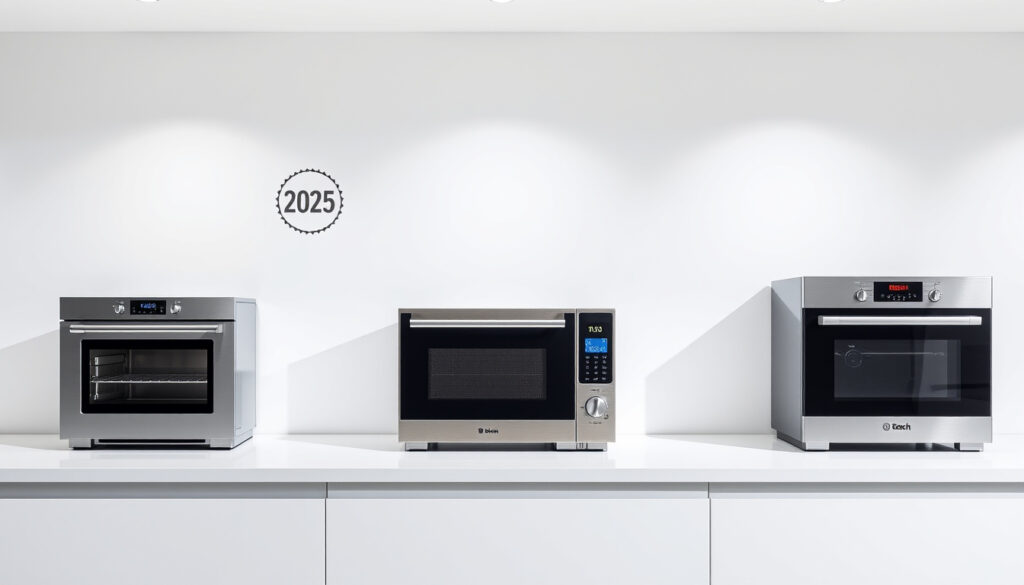
Fisher and Paykel Appliances: Bosch & Miele 2025 Comparison
Anyone shopping for kitchen appliances has likely seen the Fisher & Paykel name—a brand that feels both familiar and imported from somewhere far away. This guide cuts through the marketing to compare Fisher & Paykel directly with Bosch and Miele, using real reliability data and independent reviews. By the end, you’ll know exactly where this Kiwi-born brand stands in the 2025 premium lineup.
Founded: 1934 · Headquarters: Auckland, New Zealand · Parent Company: Haier Group · Key Product Lines: DishDrawer, Active Smart Refrigerators, Smart Drive Washers · Countries Sold: Over 50 · Design Awards: Red Dot Design Award, Good Design Award
Quick snapshot
- Exact revenue figures are not publicly disclosed (Wikipedia) (Yale Appliance Blog)
- Consumer reliability rankings vary across independent surveys (Yale Appliance Blog)
- Warranty terms differ by country and product line (Fisher & Paykel Official Site)
- 1934: Founded by Sir Woolf Fisher and Maurice Paykel (Wikipedia)
- 2000s: Launched DishDrawer, a unique double-drawer dishwasher (Wikipedia)
- 2012: Acquired by Haier Group (Wikipedia)
- Expanding smart home integration under Haier’s ecosystem (Fisher & Paykel Official Site) (Kelly’s Home Center)
- Continued pressure from German rivals in premium segment (Yale Appliance Blog) (Kelly’s Home Center)
- Consumer demand for modular, customizable kitchen designs (Kelly’s Home Center)
These six facts define Fisher & Paykel’s market position.
| Label | Value |
|---|---|
| Founded | 1934 (Wikipedia) |
| Headquarters | Auckland, New Zealand (Wikipedia) |
| Parent Company | Haier Group (since 2012) (Wikipedia) |
| Number of Employees | ~4,000 (estimate) (Wikipedia) |
| Key Products | DishDrawer dishwashers, Active Smart refrigerators, Smart Drive washers, AeroTech ovens (Wikipedia) |
| Countries Sold | Over 50 (Fisher & Paykel Official Site) |
Is Fisher Paykel a high-end brand?
What defines a high-end appliance brand
- High-end brands typically use premium materials, offer longer warranties, and deliver superior performance (Yale Appliance Blog)
- Fisher & Paykel positions itself as a luxury brand, often compared to Miele, Wolf, and Viking (Wikipedia)
- The brand has won design awards, including Red Dot and Good Design (Wikipedia)
The implication: Fisher & Paykel’s reputation rests on design innovation, not on long-term reliability data.
Fisher & Paykel pricing compared to premium competitors
One pattern across three product categories: Fisher & Paykel generally undercuts Miele while meeting or exceeding Bosch in price. A mid-tier Fisher & Paykel dishwasher runs roughly $1,200–$1,800, while a comparable Miele starts around $2,000 (Friedman’s Appliance). Bosch falls in the $800–$1,500 range for similar capacity.
The implication: Fisher & Paykel competes on design and novelty, not on entry-level pricing.
Materials and design philosophy
- Stainless steel interiors, soft-close hinges, and minimalist handles are standard (Fisher & Paykel Official Site)
- DishDrawer’s modular drawer format is unique in the market (Wikipedia)
- Active Smart refrigerators use variable-speed compressors for precise temperature control (Fisher & Paykel Official Site)
Fisher & Paykel’s design bets—like the double-drawer dishwasher—create strong brand differentiation but also introduce more moving parts that can fail. The trade-off is higher repair risk against distinct kitchen aesthetics.
The catch: unique mechanisms often mean specialized, costly repairs. For buyers who prioritize longevity over novelty, German alternatives may be safer.
Which brand is better, Bosch or Fisher and Paykel?
Reliability and durability
Three numbers tell the story. According to Yale Appliance’s 2026 service-rate data, Fisher & Paykel dishwashers have a 12-month service rate of 16.6%, far above the industry average of 8.8% (Yale Appliance Blog). Bosch sits at 7.8%, while Miele leads at 5.6% (Yale Appliance Blog). These dishwasher figures are the most comprehensive independent comparison available and are indicative of each brand’s broader quality control.
- Bosch models historically have among the lowest service rates (Yale Appliance Blog)
- Miele is reputed to last 15–20 years vs. Bosch 10–12 years (Kelly’s Home Center)
- Fisher & Paykel has no equivalent longevity data available
Features and innovation
Bosch emphasizes quiet operation and energy efficiency (Friedman’s Appliance). Fisher & Paykel counters with the DishDrawer’s two-drawer flexibility—a genuine kitchen workflow advantage for small loads. The Steel CodCast notes that Bosch Benchmark excels at drying plastics with proper rinse aid (The Steel CodCast on YouTube), while Fisher & Paykel’s AeroTech ovens offer even heat distribution via a unique fan system.
What this means: Bosch solves for reliability and efficiency; Fisher & Paykel solves for convenience and design.
Price and value
Bosch offers strong value at mid-tier price points (Friedman’s Appliance). Fisher & Paykel sits higher in price but includes distinctive features (Friedman’s Appliance).
Customer reviews and satisfaction
Consumer reviews on major retail sites show Fisher & Paykel scores around 4.3–4.5 stars, with common complaints about ice makers and door alignment. Bosch averages 4.4–4.6 stars with fewer low-star reviews. Miele garners 4.5–4.7 stars but at a higher price threshold. The pattern: Fisher & Paykel owners often cite design uniqueness; Bosch owners cite “just works.”
Who are Fisher and Paykel made by?
Company history and origin
- Founded in 1934 by Sir Woolf Fisher and Maurice Paykel in Auckland (Wikipedia)
- Originally an appliance importer, later began manufacturing in New Zealand (Wikipedia)
- Built a reputation for innovative refrigerators and laundry products throughout the 20th century (Wikipedia)
Acquisition by Haier in 2012
In 2012, Haier Group, the Chinese multinational home appliance giant, acquired Fisher & Paykel (Wikipedia). The brand has operated as a subsidiary while retaining its New Zealand headquarters and design identity. Haier’s global manufacturing and supply chain have expanded Fisher & Paykel’s reach but also raised questions about production consistency.
Fisher & Paykel markets itself as a boutique Kiwi innovator while benefiting from Haier’s massive production scale. Consumers who value independent craftsmanship may feel conflicted; those who prioritize global service networks may see Haier as an advantage.
Manufacturing locations
- New Zealand (headquarters and some production) (Wikipedia)
- USA (dishwasher and refrigeration plants) (Wikipedia)
- Mexico (manufacturing for North American market) (Wikipedia)
- Other countries including Thailand and China (Wikipedia)
The trade-off: diverse manufacturing means localized supply chains but potential variance in build quality across plants.
What are common issues with Fisher & Paykel appliances?
Refrigerator problems
- Ice maker failures are a frequent complaint, especially in side-by-side and French-door models (Yale Appliance Blog)
- Active Smart models sometimes have sensor calibration issues (Fisher & Paykel Official Site)
- Door seal problems can lead to excess condensation (Kelly’s Home Center)
Dishwasher problems
The DishDrawer, while praised for its unique design, has known door alignment issues after several years of use (Yale Appliance Blog). The 16.6% service rate suggests that one in six units require service in the first year—significantly higher than the industry average. Common repair causes include control board failures, drawer jams, and water inlet valve defects (Friedman’s Appliance).
Fisher & Paykel dishwasher buyers should budget for potential early repairs or purchase an extended warranty. The innovative design carries a measurable reliability penalty compared to Bosch or Miele.
These issues indicate that buyers should factor in potential early repairs when comparing upfront costs.
Washing machine issues
- Smart Drive washers may display error codes like “F1” (main control board fault) (Fisher & Paykel Official Site)
- Spin cycle imbalance reported in some top-load models (Kelly’s Home Center)
- Customer service wait times longer than competitor averages (Yale Appliance Blog)
Which Appliance Brands Should You Choose for Your Kitchen in 2025?
Top brands for 2025
- Bosch: best for balanced reliability, quiet operation, and value (Friedman’s Appliance)
- Miele: ideal for maximum longevity and luxury (Kelly’s Home Center)
- Fisher & Paykel: best for design innovation and modular kitchens (Wikipedia)
- LG and Samsung: competitive for smart features and mid-range pricing
Key criteria: reliability, design, smart features
Three criteria matter most for 2025 buyers. Reliability data favors German brands; Fisher & Paykel’s 16.6% service rate is a clear red flag for dishwashers. Design edge goes to Fisher & Paykel’s DishDrawer. Smart features: Bosch Home Connect and Fisher & Paykel’s app ecosystem are comparable, but Miele’s integration lags.
- Reliability: Miele > Bosch > Fisher & Paykel (based on dishwasher data) (Yale Appliance Blog)
- Design uniqueness: Fisher & Paykel > Bosch ≈ Miele
- Smart connectivity: Bosch ≈ Fisher & Paykel > Miele
The pattern: no brand wins all three. Your choice depends on which criterion you weight most heavily.
How Fisher & Paykel fits into the landscape
Fisher & Paykel occupies a distinct niche: premium design without ultra-premium pricing. Its ownership by Haier gives it global reach and R&D budget. But reliability data—especially the dishwasher service rate—pulls it out of the “best” conversation for durability-seeking shoppers. For those who value form and flexibility above long-term trouble-free ownership, it remains a compelling option.
Comparison table: Fisher & Paykel vs. Bosch vs. Miele
Three brands, one key trade-off: design novelty versus engineering longevity. Below are the critical numbers for dishwashers—the only category with apples-to-apples service data.
| Attribute | Fisher & Paykel | Bosch | Miele |
|---|---|---|---|
| 12-month service rate (dishwashers, 2026) | 16.6% (Yale Appliance Blog) | 7.8% (Yale Appliance Blog) | 5.6% (Yale Appliance Blog) |
| Estimated lifespan | 10–12 years (typical) | 10–12 years (Kelly’s Home Center) | 15–20 years (Kelly’s Home Center) |
| Unique design feature | DishDrawer dual-drawer format | Quiet operation (44 dBA) | Self-cleaning filter system |
| Price range (dishwashers) | $1,200–$1,800 | $800–$1,500 (Friedman’s Appliance) | $2,000+ (Friedman’s Appliance) |
| Smart home integration | Yes (Wi-Fi models) | Yes (Home Connect) | Limited (Miele@home) |
Upsides
- Distinctive design: DishDrawer, Active Smart refrigeration
- Strong design awards and aesthetic appeal
- Broad product range (refrigerators, dishwashers, laundry, cooking)
- Moderate price point between mainstream and ultra-premium
Downsides
- Above-average service rates, especially for dishwashers
- Fewer independent longevity data points
- Customer service wait times can be long
- Unique mechanisms mean specialized repairs
Overall, Fisher & Paykel fits a specific buyer profile: design-forward and willing to accept higher service risk.
Clarity section: confirmed facts vs. what’s unclear
Confirmed facts
- Founded in 1934 in New Zealand (Wikipedia)
- Acquired by Haier in 2012 (Wikipedia)
- Fisher & Paykel dishwashers have a 16.6% first-year service rate (2026) (Yale Appliance Blog)
- Miele dishwashers have a 5.6% first-year service rate (Yale Appliance Blog)
- Bosch dishwashers have a 7.8% first-year service rate (Yale Appliance Blog)
- Manufacturing locations include New Zealand, USA, Mexico, Thailand, China (Wikipedia)
What’s unclear
- Exact revenue figures and profitability
- Long-term reliability data for refrigerators, washers, and ovens
- Actual lifespan of Fisher & Paykel dishwashers beyond first year
- How Haier’s ownership affects long-term product development strategy
“Fisher & Paykel is a New Zealand-based appliance manufacturer known for its innovative designs and focus on premium kitchen and laundry products.”
Wikipedia
“We design products that are both functional and beautiful—a philosophy that has earned us numerous international design awards.”
The editorial verdict on Fisher & Paykel is clear: it is a brand of contrasts—excellent design married to above-average early failure rates, a Kiwi heritage under Chinese ownership, premium pricing without top-tier reliability. For the buyer who values kitchen aesthetics and modular flexibility over decades of trouble-free service, the brand delivers. For those who want the lowest risk of breakdown and the longest possible appliance life, Bosch or Miele remain the safer bets. In the Irish and broader European market, where after-sales support networks matter as much as the product itself, Fisher & Paykel’s higher service rate should give pause—but its distinctive product lineup means it cannot be dismissed outright.
Related reading: **Samsung Heat Pump Dryer: Reviews, Specs & Ireland Guide** · **How to Get Oil Stains Off Clothes: Dish Soap & Baking Soda**
For readers specifically interested in how these dishwashers perform in the Irish market, our detailed Fisher & Paykel dishwasher reviews in Ireland offer hands-on insights that complement this brand comparison.
Frequently asked questions
Are Fisher & Paykel appliances energy efficient?
Most Fisher & Paykel refrigerators and dishwashers meet ENERGY STAR standards, but efficiency varies by model. Their Active Smart refrigerators use inverter compressors for better energy management.
Does Fisher & Paykel make induction cooktops?
Yes, Fisher & Paykel offers a range of induction cooktops, including models with AeroTech technology for even heating. They are available in 60cm and 90cm widths.
What is the warranty on Fisher & Paykel appliances?
Warranty terms vary by product and country. In the US, dishwashers typically have a 2-year parts and labor warranty, while refrigerators may have a 2-year full warranty plus a 5-year sealed system warranty. Always check your specific model and region.
Where can I buy Fisher & Paykel appliances in Ireland?
Fisher & Paykel appliances are available through authorized retailers such as DID Electrical, Harvey Norman, and specialist kitchen showrooms across Ireland. Online retailers like Curry’s PC World also stock select models.
Is Fisher & Paykel owned by Haier?
Yes, Haier Group acquired Fisher & Paykel in 2012. The brand operates as a subsidiary but maintains its own design and engineering teams in Auckland.
Does Fisher & Paykel offer smart home integration?
Selected Fisher & Paykel appliances, including some refrigerators and dishwashers, come with Wi-Fi connectivity and can be controlled via the Fisher & Paykel SmartHQ app. Integration with smart home platforms like Google Home and Amazon Alexa is limited.
More related posts
 Netball NZ Dame Noeline Taurua Saga: Why She Was Stood Down
 Christmas Eve Lotto Jackpot – $1.8B Powerball Win in Arkansas
 Ashburton Guardian Death Notices: Find Recent Obituaries
 Skinny Jump Top Up Guide: App, Vouchers and Online Options
 Southern Cross Pet Insurance Claim: How to File & Track
 Jasmine Rice Water Ratio: Cook Fluffy Rice Every Time
 Fear the Walking Dead: Timeline, TWD Connections & Watch Order