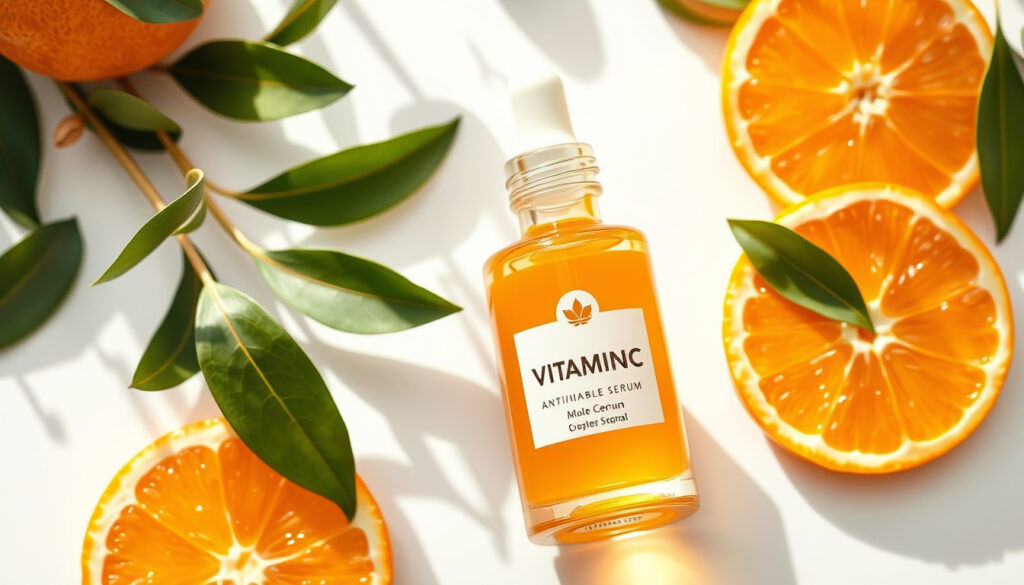
Facial Vitamin C Serum: Benefits, Uses, and Best Picks
You’ve probably seen the little orange bottles promising brighter, firmer skin, but do vitamin C serums actually work as claimed? Research from Harvard Health Publishing (medical research publisher) confirms that daily application reduces fine lines and improves skin texture over three months.
Typical concentration: 10%–20% L-ascorbic acid ·
Primary benefit: Antioxidant protection and collagen synthesis ·
Best time to apply: Morning, before sunscreen
Quick snapshot
- Antioxidant protection against free radicals (Harvard Health Publishing (medical research publisher))
- Brightens skin and reduces hyperpigmentation (Cleveland Clinic (academic medical center))
- Stimulates collagen production for firmer skin (Linus Pauling Institute (Oregon State University))
- Optimal concentration for all skin types
- Long-term effects beyond 6 months of daily use
- Efficacy of different vitamin C derivatives
- Visible improvement in fine lines and texture after 3 months of daily use (Harvard Health Publishing (medical research publisher))
- Choose a serum with L-ascorbic acid at 10%–20%
- Apply in the morning before sunscreen
- Combine with hyaluronic acid for extra hydration
Three key facts about facial vitamin C serum, one pattern: concentration and timing matter more than brand.
| Specification | Detail |
|---|---|
| Vitamin C type | L-ascorbic acid (most effective form) |
| Concentration range | 10%–20% |
| Application timing | Morning, before sunscreen |
| Optimal pH range | 3.0–3.5 for maximum absorption |
| Shelf life after opening | 3–6 months (opaque, airtight packaging) |
| Best paired ingredients | Vitamin E, ferulic acid, hyaluronic acid |
| Visible results timeline | 3 months of daily use |
| Suitable skin types | Normal, dry, oily, combination, mature |
| Formulation type | Water-based serum |
| Avoid combining with | Benzoyl peroxide (oxidizes vitamin C) |
| Storage recommendation | Cool, dark place away from direct sunlight |
What does vitamin C serum do to the face?
Vitamin C, specifically L-ascorbic acid, is a potent antioxidant. It neutralizes free radicals generated by UV rays and pollution, reducing oxidative stress on the skin (Harvard Health Publishing (medical research publisher)). This mechanism is the foundation of its benefits.
How does vitamin C brighten skin?
- It inhibits melanin production, fading dark spots and evening out skin tone (Cleveland Clinic (academic medical center)).
- Clinical studies show a reduction in hyperpigmentation after consistent use.
Does vitamin C reduce wrinkles?
- Yes, by boosting collagen synthesis, which firms the skin and softens fine lines (Linus Pauling Institute (Oregon State University)).
- Harvard Health found that daily use for three months improved the appearance of coarse wrinkles on the face and neck.
Can vitamin C protect against sun damage?
- It works as a backup to sunscreen by reducing the impact of UV exposure (Harvard Health Publishing (medical research publisher)).
- Combined with vitamin E, it has been shown to reduce UV injury in PM literature (PMC (National Institutes of Health)).
The antioxidant backup effect means that even the most diligent sunscreen user can benefit from adding a vitamin C serum to their morning routine.
The implication: Vitamin C isn’t a sunscreen substitute, but it works synergistically. For daily protection, layer a serum under SPF 30 or higher.
Is vitamin C serum good for a 60 year old woman?
Mature skin faces specific challenges: thinning, loss of collagen, and stubborn hyperpigmentation. Vitamin C directly addresses these areas.
What are the key benefits for mature skin?
- Stimulates collagen to reduce sagging and wrinkles (Linus Pauling Institute (Oregon State University)).
- Fades age spots by blocking melanin production (Harvard Health Publishing (medical research publisher)).
- Improves skin texture and firmness, as shown in 12-week studies at 3%–10% concentration.
How to choose a vitamin C serum for over 60?
- Look for L-ascorbic acid at 10%–20% — higher concentrations offer more visible results.
- Combine with hyaluronic acid for hydration, since mature skin produces less natural moisture.
- Avoid products with added fragrance to minimize irritation.
Higher concentrations work better for maturity but also carry a higher risk of irritation. Start with 10% and increase if tolerated.
The pattern: Vitamin C is particularly well-suited for post-menopausal skin because it targets the root causes of aging — collagen loss and oxidative stress — unlike purely moisturizing creams.
What happens if I use vitamin C serum every day?
Daily use is generally safe and recommended by dermatologists for most skin types. But routine matters.
Is daily use safe?
- Yes. Clinical studies use daily application and report no serious adverse effects (Harvard Health Publishing (medical research publisher)).
- Some users experience mild tingling or redness, especially with serums above 15%.
Can I use vitamin C serum twice a day?
- Healthline cites a 2013 review recommending application every 8 hours for maximum protection (Healthline (consumer health publisher)).
- Twice-daily use is acceptable if your skin tolerates it, but morning application alone is sufficient for most.
What are the side effects of overuse?
- Potential for mild irritation, stinging, or breakouts if the concentration is too high or the formula is not pH-balanced.
- Excessive use won’t accelerate results — vitamin C has a saturation point.
The trade-off: More frequent application may boost antioxidant protection, but it increases the risk of sensitivity. Listen to your skin.
Which is better vitamin C or retinol?
Both are proven anti-aging ingredients, but they work through different mechanisms.
Two ingredients, one key difference: vitamin C protects, retinol repairs. Here’s how they compare.
| Feature | Vitamin C | Retinol |
|---|---|---|
| Primary function | Antioxidant, brightening | Cell-communicating, triggers turnover |
| Best time to use | Morning (with sunscreen) | Evening (light-sensitive) |
| Key benefit | Fades dark spots, protects from UV | Reduces wrinkles, smooths texture |
| Typical results | 3 months for visible improvement | 3–6 months for noticeable change |
| Can they be combined? | Yes — vitamin C in AM, retinol in PM | |
What are the differences between vitamin C and retinol?
- Vitamin C is an antioxidant that neutralizes free radicals; retinol speeds up cell turnover.
- Vitamin C is water-soluble; retinol is oil-soluble and can be more irritating.
Can you use vitamin C and retinol together?
- Yes, but not at the same time. Use vitamin C in the morning and retinol at night.
- Some formulations combine them, but separate application is more effective.
Which one should I use for anti-aging?
- For brightening and protection: vitamin C takes the lead.
- For deep wrinkle correction and texture: retinol is stronger.
- Most dermatologists recommend using both in a split routine.
A 60-year-old woman worried about age spots and fine lines would benefit most from a morning vitamin C and evening retinol routine — if her skin tolerates both.
What this means: Don’t choose one over the other; layer them across your day for the best anti-aging results.
What is the best vitamin C serum for the face?
Dermatologists have clear preferences based on stability, concentration, and formulation.
Five popular serums, one pattern: L-ascorbic acid at 10%–20% is the standard for efficacy.
| Product | Key ingredient | Concentration | Best for | Price range |
|---|---|---|---|---|
| La Roche-Posay Pure Vitamin C | L-ascorbic acid + salicylic acid | 10% | Acne-prone or oily skin | $$$ |
| Medik8 C-Tetra | 3-O-ethyl ascorbic acid (derivative) | 14% | Sensitive skin | $$$ |
| SkinCeuticals C E Ferulic | L-ascorbic acid + vitamin E + ferulic acid | 15% | All skin types, anti-aging | $$$$ |
| Obagi Professional-C Serum | L-ascorbic acid | 20% | Mature skin, hyperpigmentation | $$$$ |
| Timeless 20% Vitamin C + E + Ferulic | L-ascorbic acid | 20% | Budget anti-aging | $ |
What do dermatologists recommend?
- Serums with L-ascorbic acid at 10%–20% are widely preferred.
- Brands like SkinCeuticals and Obagi have strong clinical backing (Healthline (consumer health publisher)).
Which vitamin C serum is best for microneedling?
- Choose a serum with added vitamin E for enhanced absorption through microchannels.
- Formulations without alcohol or fragrances are less likely to sting during the procedure.
Which La Roche-Posay vitamin C serum is best?
- The Pure Vitamin C Face Serum (10% L-ascorbic acid + salicylic acid) is ideal for those with occasional breakouts.
What about Medik8?
- Medik8 C-Tetra uses a stabilised derivative, making it less irritating for sensitive skin, though slightly less potent than pure L-ascorbic acid.
Many well-known brands do not disclose their exact concentration or use derivatives with unproven efficacy. Stick to L-ascorbic acid serums with transparent labelling.
The catch: The “best” serum depends on your skin type and budget. For mature skin over 60, a 20% L-ascorbic acid serum like Obagi is a strong choice; for sensitive skin, Medik8’s derivative may be gentler.
Clarity: What we know and what we don’t
Confirmed facts
- Vitamin C is a potent antioxidant that neutralizes free radicals (Harvard Health Publishing (medical research publisher)).
- L-ascorbic acid is the most effective form (Healthline (consumer health publisher)).
- Daily use is safe for most skin types (Harvard Health Publishing (medical research publisher)).
- Combining with sunscreen reduces UV damage (Harvard Health Publishing (medical research publisher)).
- Improves collagen synthesis and reduces wrinkles after 3 months (Linus Pauling Institute (Oregon State University)).
What’s unclear
- Optimal concentration for every skin type (10% vs 20% varies).
- Long-term effects beyond 6 months of consistent use.
- Efficacy of vitamin C derivatives (e.g., ascorbyl phosphate) compared to L-ascorbic.
- Whether twice-daily application provides meaningful extra benefits.
- Impact of vitamin C on deep scarring.
Quotes from dermatologists and researchers
“Vitamin C is a potent antioxidant that helps neutralize free radicals and reduces oxidative stress from UV exposure and pollution.”
— Harvard Health Publishing (medical research publisher)
“Vitamin C acts as an antioxidant and helps the skin repair itself from pollution and sun damage.”
— Dr. Nana Duffy, board-certified dermatologist, quoted in Healthline (consumer health publisher)
“Topical vitamin C can help even out skin tone by fading sun spots and other dark spots.”
“Dermatologists consider vitamin C serum a gold standard and highly recommend it.”
For anyone in New Zealand considering a facial vitamin C serum, the choice is clear: a high-quality L-ascorbic acid serum (10%–20%) applied every morning before sunscreen offers proven antioxidant protection, collagen stimulation, and a gradual fade of hyperpigmentation. For those over 60, combining a 15–20% serum with a moisturiser containing hyaluronic acid will deliver the most noticeable improvement in firmness and glow. The decision to start — and to stick with it for at least three months — is the one that matters most.
pmc.ncbi.nlm.nih.gov, aadermatology.com, healthline.com, texasdls.com, westdermatology.com, specdermatl.com, youtube.com
For a deeper look at how daily use can improve skin tone and texture, see this comprehensive guide to vitamin C serum benefits.
Frequently asked questions
Can I use vitamin C serum with hyaluronic acid?
Yes, hyaluronic acid and vitamin C complement each other. Apply vitamin C first on clean skin, then hyaluronic acid to lock in hydration.
How long does it take to see results from vitamin C serum?
Most studies show visible improvement in skin brightness and fine lines after 3 months of daily use.
What is the shelf life of vitamin C serum?
L-ascorbic acid serums are unstable. Many brands recommend use within 3–6 months after opening. Look for opaque, airtight packaging.
Should I use vitamin C serum at night?
Morning application is preferred because vitamin C boosts sunscreen effectiveness. Night use is not harmful but less targeted.
Can vitamin C serum cause breakouts?
It can if the formula is too oily or if your skin is sensitive to high concentrations. Stick to low concentrations (10%) and non-comedogenic formulas.
Related reading
- Bee Venom Cream NZ – another skincare product with unique anti-aging claims.
- Lion’s Mane Supplement NZ – a complementary supplement for cognitive and skin health.
More related posts
 Barbie Dreamhouse NZ: Price Comparison & Buying Guide
 Die on This Hill: Meaning, Singer, and Why It’s So Popular
 Salt and Pepper Grinders NZ: Top Picks from Farmers, Kmart
 Beef Short Ribs Recipe: Best Way to Cook Tender, Flavorful Ribs
 Double Sided Tape NZ: Strongest at Kmart, Bunnings, Mitre 10
 Who Won State of Origin 2025? Full Series Recap
 Tents for Sale NZ: Compare New, Used & Cheap Camping Tents
 2026 Winter Olympics Snowboarding: Schedule, Venue, Lineup & Results