What Continent Is New Zealand In? Key Facts
Ask three people what continent New Zealand belongs to and you might get three different answers — reflecting the real divide between physical geography and cultural-political groupings. This guide cuts through the confusion with facts and context so you know which answer to use when.
New Zealand’s land area: 268,021 km² ·
Distance from Australia: 2,000 km southeast ·
Number of main islands: 2 (North and South) ·
Population: 5.1 million (2023) ·
Recognized continents (common model): 7 ·
Oceania region countries: 14
Quick snapshot
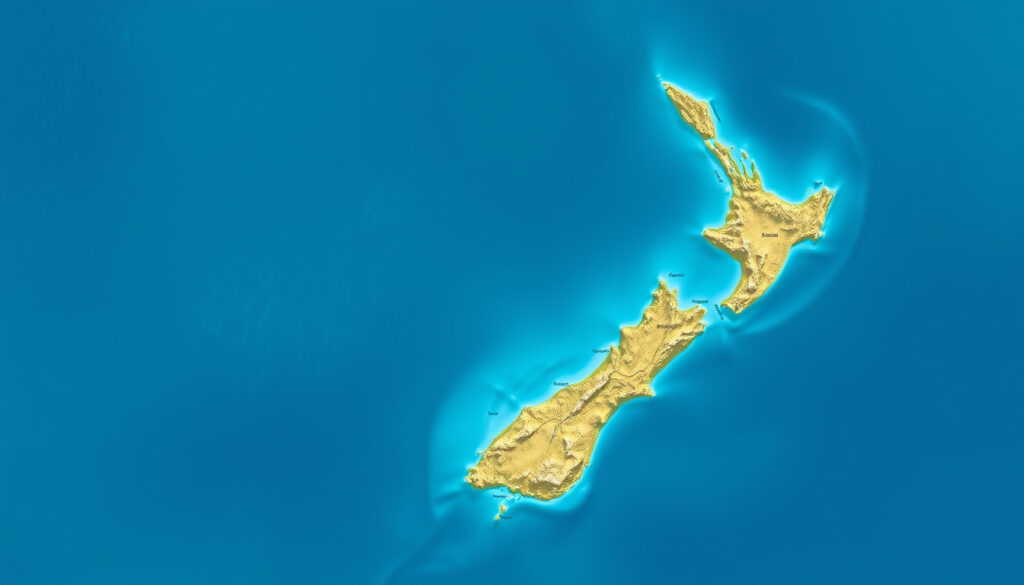
- New Zealand is an island country in the southwestern Pacific Ocean (World Atlas).
- Zealandia is a largely submerged continental crust, 94% underwater (CORDIS).
- New Zealand is one of 14 sovereign nations in Oceania (Wikipedia).
- 1995: Bruce Luyendyk coins “Zealandia” (Wikipedia).
- 2017: Formal geological study makes the case for Zealandia as a continent (CORDIS).
- Zealandia may gain wider recognition in textbooks if more countries adopt the eight-continent model (Wikipedia).
- UN geoscheme continues to use Oceania as a region, not a continent (UN Statistics Division).
- Golden Visa New Zealand Guide
- Fun Things to Do in Auckland for Adults
Here is a quick reference of key data points.
| Official continent (common model) | Australia (or Oceania, depending on region) |
| Geological continent | Zealandia (proposed) |
| Region | Oceania |
| Land area | 268,021 km² |
| Population | 5.1 million |
| Number of islands | Over 600, main two: North and South |
What continent does New Zealand fall under?
The short answer: Oceania
- In most cultural and political contexts, New Zealand is part of the region Oceania. The United Nations Statistics Division groups New Zealand within Oceania, which also includes Australia, Papua New Guinea, Fiji, and other Pacific island nations (UN Statistics Division).
- World Atlas describes New Zealand as “one of fourteen sovereign nations that make up Oceania.”
- However, many English-speaking schools teach a seven-continent model where Australia is the continent, and New Zealand is grouped under it for simplicity (Wikipedia).
Why some sources say Australia
- In the seven-continent model used by countries like the United States, Canada, and the United Kingdom, the continent that includes New Zealand is called Australia (or sometimes Australasia). This model treats Australia as the continental landmass, and New Zealand as an island nation within that continent.
- Geologically, New Zealand is not on the Australian continental shelf — it sits on a separate continental fragment called Zealandia (GSA Today). But textbook simplifications often overlook this nuance.
The pattern: The same geography gets labeled differently depending on whether the audience is a classroom, a United Nations report, or a geology journal.
Is New Zealand part of the Australia continent?
Geological distinction: Zealandia vs. Australian plate
- GSA Today states that “New Zealand and New Caledonia have never been regarded as part of the Australian continent” in geological terms.
- Zealandia is a 4.9 million km² region of continental crust, about 94% submerged, with New Zealand as its largest above-sea portion (Wikipedia).
- The Australian plate and the Pacific plate meet near New Zealand, creating the tectonic boundary that formed the Southern Alps.
Political and cultural separation
- New Zealand is a fully independent nation, separate from Australia since it became a dominion in 1907 (Te Ara Encyclopedia of New Zealand).
- Cultural, political, and trade ties exist, but the two countries are distinct in governance, currency, and identity.
What this means: If someone says New Zealand is “part of Australia,” they are almost certainly using a simplified school model — not referring to political or geological reality.
Why is Oceania no longer a continent?
The shift from Oceania to Australia as a continent name
- The term “Oceania” originally gained popularity in the 19th century as a way to group islands of the Pacific with Australia. But as the seven-continent model became standard, many English-speaking countries replaced Oceania with Australia as the continent name (Wikipedia).
- Oceania remains in active use by the United Nations and many international organizations as a geographic region, not a geological continent (UN Statistics Division).
The role of the seven-continent model
- The seven-continent model is the most widely taught worldwide: Africa, Antarctica, Asia, Australia, Europe, North America, South America.
- In this model, Australia is the continent, and New Zealand is an island within it. Oceania is either omitted or used as a synonym for the Australia continent in some textbooks.
Oceania never “stopped” being a continent — it was never a geological continent to begin with. It’s a cultural region that some models choose to treat as a continent for convenience.
The trade-off: Using Australia as the continent name simplifies maps, but it erases the distinct geography of New Zealand and the Pacific islands.
Do we have 7 or 8 continents?
The standard seven-continent model
- Most countries teach seven continents: Africa, Antarctica, Asia, Australia, Europe, North America, South America.
- Under this model, New Zealand falls under the continent of Australia (or Oceania in some curricula).
The eight-continent model including Zealandia
- In 2017, a team of geologists published a study in GSA Today arguing that Zealandia meets all criteria for continent status: it has continental crust, a distinct geologic history, and a well-defined area of 4.9 million km².
- Zealandia broke away from Gondwana around 60–85 million years ago and then largely sank (CORDIS).
- If accepted, the eight continents would be: Africa, Antarctica, Asia, Australia, Europe, North America, South America, and Zealandia.
The implication: Whether we have seven or eight continents is not a fixed truth — it’s a scientific debate that affects how New Zealand is classified. Most school systems have not yet adopted the eight-continent model.
Where is New Zealand located in the world?
Coordinates and surrounding ocean
- New Zealand lies between latitudes 34°S and 47°S and longitudes 166°E and 179°E (Wikipedia).
- It is in the southwestern Pacific Ocean, about 2,000 km southeast of Australia (World Atlas).
- The Tasman Sea separates New Zealand from the Australian mainland.
Neighboring countries and regions
- To the north: New Caledonia (France), Fiji, and Tonga.
- To the east: no major landmass until South America (Chile) — about 9,000 km away.
- New Zealand’s Exclusive Economic Zone covers over 4 million km², one of the largest in the world (NIWA).
Why this matters: New Zealand’s remote location in the Pacific reinforces why it’s grouped regionally with island nations rather than with the Australian landmass — geology and geography both point to a separate identity.
If you’re planning a trip or move, see Fun Things to Do in Auckland for Adults and Golden Visa New Zealand Guide.
Comparison: How the three models stack up
Three different frameworks, three different answers — here’s how they compare on key criteria.
| Criterion | Oceania model (cultural/political) | Australia model (7-continent school) | Zealandia model (geological) |
|---|---|---|---|
| New Zealand’s status | One of 14 sovereign nations in Oceania | An island country within the Australia continent | The largest landmass on the Zealandia continent |
| Basis for classification | UN geoscheme, cultural ties | Textbook tradition, simplicity | Continental crust, tectonic boundaries |
| Number of continents | Not a continent (region only) | 7 (Australia is one) | 8 (Zealandia is the 8th) |
| Widely taught? | Yes, in many Pacific nations and the UN | Yes, in the US, Canada, UK, and others | No, still under debate |
The takeaway: The answer to “what continent is New Zealand in?” depends on which framework your audience trusts. For everyday geography, Oceania or Australia both work depending on context. For scientific accuracy, Zealandia is the emerging geological truth.
What we know for sure — and what’s still debated
Confirmed facts
- New Zealand is an island country in the southwestern Pacific Ocean (World Atlas).
- New Zealand is part of the region Oceania (UN Statistics Division).
- Zealandia is a 4.9 million km² submerged continental crust with New Zealand at its highest point (Wikipedia).
What’s unclear
- Whether Oceania or Australia is the “correct” continent depends on the educational model — no universal authority settles this (Wikipedia).
- Zealandia is not yet widely taught in schools, so most people are still told there are seven continents (CORDIS).
- The exact number of continents (7 vs. 8) varies by region and curriculum (Wikipedia).
The bottom line: The confusion is rooted in different frameworks, and knowing which one applies is the key.
Perspectives from experts
“New Zealand is not part of the Australian continent in any geological sense. It sits on a separate continental fragment, Zealandia, which is mostly underwater.”
— Geologist Nick Mortimer, co-author of the 2017 GSA Today study on Zealandia
“In the UN geoscheme, Oceania is the standard regional grouping for New Zealand. It’s a statistical region, not a geological continent, but it’s the most widely used classification for international data.”
— United Nations Statistics Division, Geographic Regions
“Most school students in the United States learn the seven-continent model. Under that model, Australia is the continent, and New Zealand is an island country within it.”
— World Atlas editorial team
Geologists see New Zealand as the peak of a lost continent. School textbooks see it as an island in Australia. Meanwhile, the UN and most airlines treat it as part of Oceania. All three are correct in their own domain — the key is knowing which domain you’re in.
What this means: Context determines the correct answer.
For anyone researching New Zealand — whether you’re a student, traveler, or investor — the first step is to ask who is asking and why. If you’re filling out a school exam, stick with the seven-continent model used in your country. If you’re buying a map or planning a trip, Oceania is the safest label. And if you’re debating with a geologist, don’t be surprised if they pull out a map of Zealandia and say there are eight continents. The confusion isn’t going away anytime soon, but knowing why the answer varies is the real takeaway.
This geographical distinction often leads to confusion, especially given the debate over Australia as a continent and how it affects the classification of neighboring islands like New Zealand.
Frequently asked questions
Is New Zealand part of Australia?
No, New Zealand is a separate sovereign nation. It is not part of Australia politically, and geologically it sits on a different continental fragment (Zealandia). Some school models group it under the continent of Australia, but that’s a simplification.
What is the difference between Oceania and Australia as continents?
Oceania is a geographic region that includes Australia, New Zealand, and the Pacific islands. Australia, in the seven-continent model, refers specifically to the continent that includes mainland Australia, with New Zealand grouped as an island nation within it.
Why do some people say New Zealand is in Europe?
That is incorrect. New Zealand is nowhere near Europe — it is in the southwestern Pacific Ocean. The confusion may stem from New Zealand’s colonial history with Britain, but geographically it is entirely in Oceania.
Is New Zealand considered part of Asia?
No, New Zealand is not in Asia. It is located in the Pacific region of Oceania, roughly 9,000 km southeast of Asia.
How many continents are there in the world?
The most widely taught model has seven continents: Africa, Antarctica, Asia, Australia, Europe, North America, and South America. Some geologists propose an eighth continent, Zealandia, which is 94% submerged and includes New Zealand.
What is Zealandia?
Zealandia is a mostly submerged continent (about 94% underwater) in the southwestern Pacific Ocean. It includes New Zealand, New Caledonia, and surrounding submerged crust. It was formally proposed as a continent in 2017.
Is New Zealand an island or a continent?
New Zealand is an island country, not a continent itself. However, it is the largest above-water portion of the proposed continent Zealandia.
More related posts
 Cast of Despicable Me 4: Voice Actors & New Characters
 Curtain Track Runners Wellington: Suppliers & Options
 Fate of Ophelia Lyrics: Taylor Swift Full Song Text & Meaning
 12 bank code NZ: Which bank uses code 12
 India vs Netherlands T20 World Cup 2026: Scorecard & Result
 Kei Te Pai Meaning: What Does It Mean and How to Use It
 How to Transcribe Audio to Text: Free Online AI Converters
 Activities for Kids Auckland: Indoor, Outdoor & Free Fun