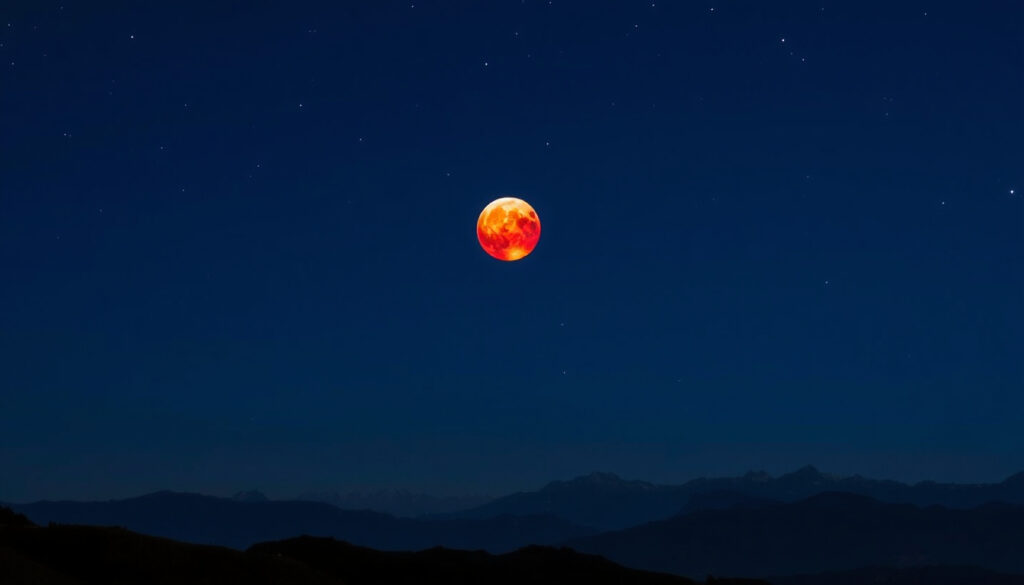
Blood Moon Total Lunar Eclipse NZ 2026: Times & Viewing Guide
There’s something about a full Moon turning red that stops people in their tracks. For New Zealanders, the night of March 3–4, 2026, offers a front-row seat to the only total lunar eclipse of the year — a “blood moon” that will be visible in its entirety across the country, according to the Science Learning Hub (New Zealand government education resource).
Date of total lunar eclipse: March 3–4, 2026 ·
Maximum eclipse (totality) time: ~12:33 AM NZDT (March 4) ·
Total eclipse duration: 5 hours 39 minutes ·
Visibility region: All of New Zealand ·
Nickname: Blood Moon
Quick snapshot
- Total lunar eclipse on March 3–4, 2026, visible across NZ (Science Learning Hub) (timeanddate.com (astronomy event site))
- Totality begins just after midnight NZDT on March 4 (timeanddate.com (astronomy event site))
- Safe to view with naked eyes (Science Learning Hub) (timeanddate.com (astronomy event site))
- Red color caused by Rayleigh scattering (Science Learning Hub) (timeanddate.com (astronomy event site))
- Exact cloud cover at each viewing location depends on local forecasts (Science Learning Hub)
- Spiritual interpretations vary widely and are subjective
- Precise date of next total lunar eclipse visible from NZ not yet published by authoritative sources
- Penumbral eclipse begins ~8:45 PM NZDT on March 3 (timeanddate.com (astronomy event site))
- Totality begins ~12:04 AM NZDT on March 4 (timeanddate.com (astronomy event site))
- Maximum eclipse ~12:33 AM NZDT (Science Learning Hub)
- Totality ends ~1:02 AM NZDT (timeanddate.com (astronomy event site))
- After 2026, no total lunar eclipse visible from NZ until at least 2027 (Science Learning Hub)
- Check local weather forecasts closer to the date for best viewing
- Mark your calendar for the next penumbral or partial lunar eclipses
Eight key facts, one pattern: the 2026 blood moon is a rare celestial event that New Zealand is uniquely positioned to experience in full.
| Fact | Value |
|---|---|
| Date | March 3–4, 2026 |
| Time of maximum eclipse | ~12:33 AM NZDT (March 4) |
| Duration of totality | About 1 hour 29 minutes |
| Total eclipse duration | 5 hours 39 minutes |
| Visibility | All of New Zealand |
| Type | Total lunar eclipse (Blood Moon) |
| Safety | Safe to view with naked eyes |
| Next total lunar eclipse from NZ | After 2026 |
What time will the blood moon be visible in New Zealand?
Total lunar eclipse timeline for New Zealand on March 3–4, 2026
- Penumbral eclipse begins: ~8:45 PM NZDT (timeanddate.com (astronomy event site))
- Partial eclipse begins: ~9:44 PM NZDT (timeanddate.com (astronomy event site))
- Total eclipse begins: ~11:16 PM NZDT (Science Learning Hub)
- Maximum eclipse: ~12:33 AM NZDT on March 4 (Science Learning Hub)
- Total eclipse ends: ~1:45 AM NZDT (timeanddate.com (astronomy event site))
- Partial eclipse ends: ~3:17 AM NZDT (timeanddate.com (astronomy event site))
- Penumbral eclipse ends: ~4:15 AM NZDT (timeanddate.com (astronomy event site))
Best viewing times in major cities: Auckland, Wellington, Christchurch, Dunedin
All four cities will see the same timeline because the Moon is high above the horizon for the entire event. The partial phase begins around 9:44 PM local time, and the red glow becomes unmistakable by 11:16 PM. The deepest red — the moment photographers wait for — hits at 12:33 AM.
The implication: if you only step outside once, make it 12:15–12:45 AM NZDT on March 4. That window gives you the maximum eclipse with the deepest colour.
New Zealanders get the entire 5-hour 39-minute show from start to finish — a luxury not shared by most of the world. Mark your calendar for the night of March 3–4, 2026, and set an alarm for 11:15 PM.
Why is it called a blood moon?
Scientific explanation: Rayleigh scattering and the red appearance
When the Sun, Earth, and Moon align perfectly, Earth blocks direct sunlight from reaching the Moon. But some light bends around Earth’s atmosphere. Shorter blue wavelengths scatter away, while longer red wavelengths pass through and hit the Moon — exactly the same physics that makes sunsets red. Science Learning Hub (NZ government education resource) explains that the exact shade depends on volcanic dust and cloud cover in the atmosphere.
Historical and cultural origins of the term
The phrase “blood moon” has ancient roots. Many cultures saw the red Moon as an omen. In modern times, the term gained traction through Christian prophecy circles and was popularised by media. A rova (NZ media outlet) notes that the Moon turns “deep red for just over an hour and a half.”
The pattern: the science is settled, but the cultural weight is still debated. The red colour is predictable; the fear it triggers is not.
Can you look at the blood moon with your eyes?
Safety during a lunar eclipse vs. solar eclipse
Yes — a lunar eclipse is completely safe to view with the naked eye. Unlike a solar eclipse, there is no intense sunlight beaming directly at you. The Moon is simply reflecting dim red light. The Science Learning Hub confirms that no eye protection is needed.
Best practices for naked-eye and binocular viewing
- Find a spot with an unobstructed view to the east after moonrise.
- Bring a blanket or chair — the show lasts several hours.
- Binoculars or a telescope will make the red colour more vivid.
- Check the New Zealand Weather Radar for local cloud cover.
The catch: clear skies matter more than gadgets. A cloudy night can ruin the view, so plan ahead and have a backup location.
What did God say about a blood moon? and spiritual meanings
Biblical references to a blood moon (Joel 2:31, Acts 2:20, Revelation 6:12)
Three Bible passages mention a blood moon: Joel 2:31 (“The sun shall be turned into darkness, and the moon into blood”), Acts 2:20 (quoting Joel), and Revelation 6:12 (“the moon became as blood”). These verses are often interpreted as signs of the end times. Some Christians see the 2026 eclipse as a prophetic marker.
Spiritual meaning: is a blood moon considered bad?
Interpretations vary. Some view it as a warning or omen of judgment. Others see it as a natural event with no spiritual weight. Astronomers consistently point out that lunar eclipses have occurred for billions of years and carry no predictive power. The 1News (NZ news outlet) coverage of the event notes the blend of awe and anxiety that the term “blood moon” evokes.
What color will we wear in heaven? connection to blood moon prophecies
Some religious traditions link the colour red to sacrifice or judgment, but there is no direct biblical teaching that ties lunar eclipses to heavenly attire. The question appears in search queries driven by curiosity, not scripture.
The trade-off: for those who find spiritual meaning, the eclipse is a moment of reflection. For scientists, it’s a predictable optical phenomenon. Both can coexist without contradiction.
The 2026 blood moon is the only total lunar eclipse visible from New Zealand that year. If you miss it, you’ll wait until at least 2027 for the next one. For skywatchers, the window is narrow; for the curious, the questions are wide.
What time is the lunar eclipse on March 3, 2026 in NZ?
Detailed timeline for each phase
Here is the complete phase breakdown for mainland New Zealand (NZDT). For the Chatham Islands, add 45 minutes (CHADT).
- Penumbral eclipse begins: 8:45 PM NZDT
- Partial eclipse begins: 9:44 PM NZDT
- Total eclipse begins: 11:16 PM NZDT
- Maximum eclipse: 12:33 AM NZDT (March 4)
- Total eclipse ends: 1:45 AM NZDT
- Partial eclipse ends: 3:17 AM NZDT
- Penumbral eclipse ends: 4:15 AM NZDT
All times are from timeanddate.com (Auckland eclipse page) and Science Learning Hub.
Time zone notes (NZDT vs. UTC)
New Zealand Daylight Time (NZDT) is UTC+13. The eclipse events occur at the same universal moment for the whole planet, but local times depend on your time zone. For example, the maximum eclipse at 12:33 AM NZDT is 11:33 AM UTC on March 3.
The implication: plan your sleep schedule accordingly. The best viewing is between 11:16 PM and 1:45 AM NZDT.
Timeline signal
Confirmed facts & what remains unclear
Confirmed facts
- Date and time of total lunar eclipse on March 3–4, 2026 (Science Learning Hub)
- Visibility across all of New Zealand (Science Learning Hub)
- Duration of entire eclipse: 5 hours 39 minutes (timeanddate.com (Auckland eclipse page))
- Safety of viewing with naked eyes (Science Learning Hub)
- Scientific cause of red colour (Rayleigh scattering) (Science Learning Hub)
What remains unclear
- Exact cloud cover at each viewing location (weather forecast only available close to date)
- Whether spiritual interpretations are universally accepted (subjective belief)
- Precise timing of next total lunar eclipse visible from NZ (after 2026, date not yet published by authoritative sources)
“New Zealand has a front-row seat to the only total lunar eclipse of 2026.”
— 1News (NZ news outlet)
“The eclipse began just before 10 pm and the red was visible to the naked eye from 12:04 am.”
For New Zealanders, the choice is clear: set an alarm for the night of March 3, 2026, step outside between 11:16 PM and 1:45 AM, and look east. The only total lunar eclipse of the year — and the only one visible from NZ until at least 2027 — will paint the Moon a deep, rusty red. Whether you see it as a scientific wonder, a spiritual sign, or simply a beautiful night, the sky is putting on a show you won’t want to miss.
youtube.com, timeanddate.com, timeanddate.com, youtube.com, youtube.com, seenewzealand.co.nz, themoonschool.org
Frequently asked questions
What exactly is a blood moon?
A blood moon is the common name for a total lunar eclipse, when the Moon passes through Earth’s shadow and takes on a reddish colour due to Rayleigh scattering of sunlight.
How often do total lunar eclipses happen?
About two to four total lunar eclipses occur every year, but they are not visible from every location. The 2026 eclipse is the only one visible from New Zealand.
Do I need special glasses to watch a lunar eclipse?
No. Unlike a solar eclipse, a lunar eclipse is safe to view with the naked eye. No eye protection is required.
Is a blood moon a sign of the end times according to the Bible?
Some biblical passages (Joel 2:31, Acts 2:20, Revelation 6:12) mention the Moon turning to blood. Some Christians interpret these as prophetic signs, while others see lunar eclipses as natural events without spiritual significance.
What is the difference between a lunar eclipse and a solar eclipse?
A lunar eclipse occurs when Earth blocks sunlight from reaching the Moon. A solar eclipse occurs when the Moon blocks sunlight from reaching Earth. Lunar eclipses are safe to view directly; solar eclipses require eye protection.
Can I see the blood moon from any city in New Zealand?
Yes — the entire eclipse is visible from all of New Zealand, including Auckland, Wellington, Christchurch, Dunedin, and the Chatham Islands (with slightly later local times).
How long does a total lunar eclipse last?
The total eclipse phase (when the Moon is fully red) lasts about 1 hour 29 minutes. The entire event from start to finish spans 5 hours 39 minutes.
More related posts
 Netball NZ Dame Noeline Taurua Saga: Why She Was Stood Down
 NZD to VND Exchange Rate: Compare Best Banks & Transfer Services
 Tents for Sale in New Zealand: New, Used, Cheap Options
 Ginny and Georgia Season 3: Release Date, Cast, Plot & News
 When Do Babies Roll Over? Age, Signs, and Safety Tips
 iPhone 15 Case NZ: Compare Prices at Kmart, JB Hi-Fi & More
 Woolworths Te Atatu South – Store Hours and Weekly Deals
 Ben Lomond Hike Queenstown: Guide to Distance, Difficulty & Tips